
 EN
EN



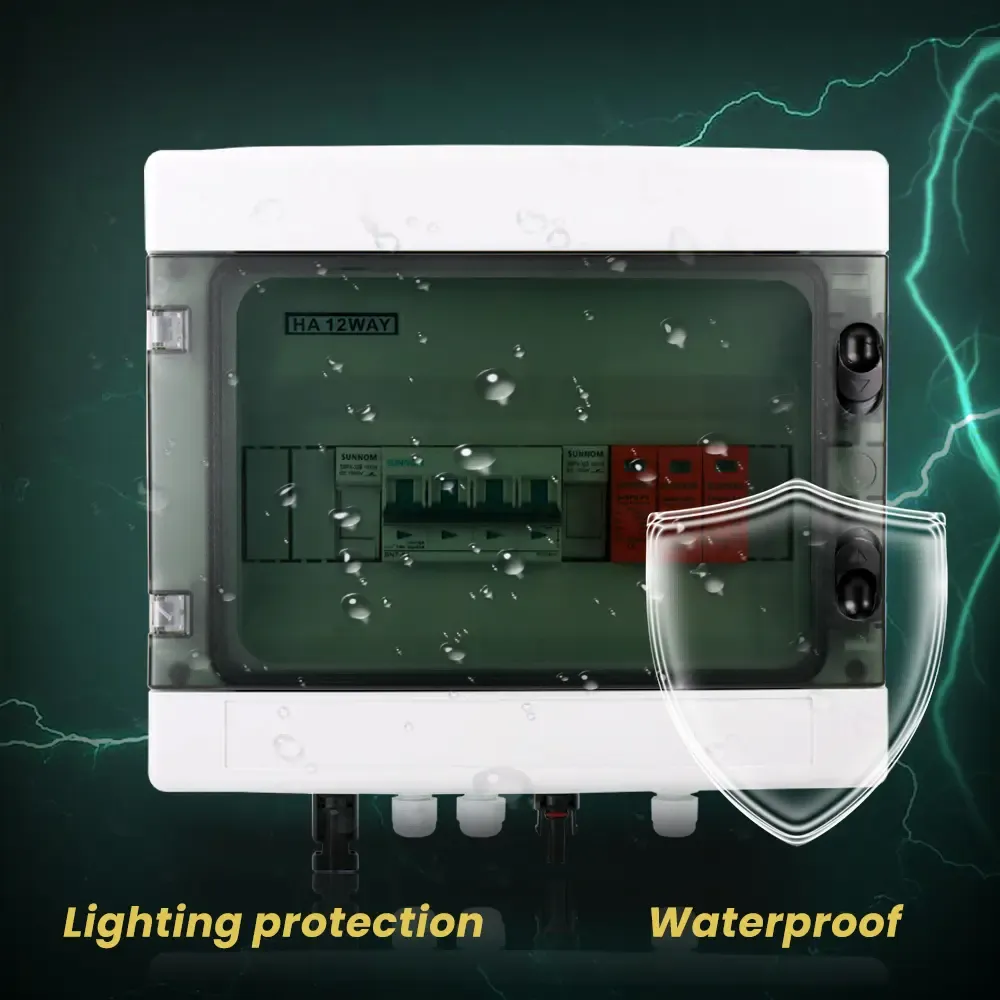
When designing and implementing photovoltaic power systems, the selection of a solar combiner box represents a critical juncture where safety, efficiency, and regulatory compliance converge. This essential component serves as the first aggregation point for multiple solar array strings, consolidating direct current power before it flows to inverters or charge controllers. The safety features embedded within a solar combiner box directly influence system reliability, personnel protection, fire prevention, and long-term operational integrity. Understanding which safety characteristics deserve priority during the selection process enables system designers, installers, and facility managers to make informed decisions that protect both human life and capital investment while ensuring uninterrupted energy generation.
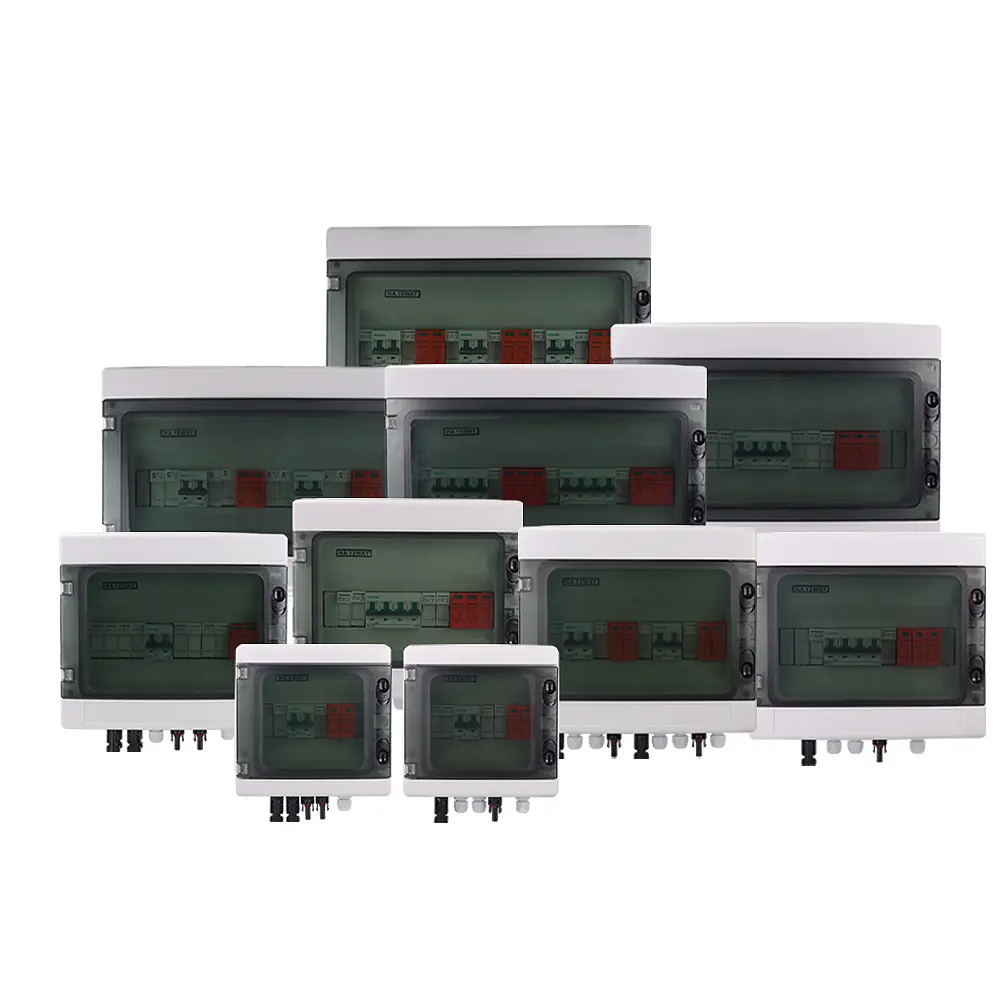
The photovoltaic industry has witnessed significant evolution in safety standards and engineering practices over the past two decades, driven by field experience, incident analysis, and advancing technology. Modern solar combiner box designs incorporate multiple layers of protection that address electrical hazards ranging from overcurrent conditions and ground faults to arc flash events and thermal runaway scenarios. Selecting a unit without comprehensive safety features exposes installations to elevated risk of equipment damage, production downtime, and potentially catastrophic failures. This article examines the specific safety characteristics that distinguish professionally engineered solar combiner boxes from inadequate alternatives, providing technical guidance rooted in established electrical codes, industry best practices, and real-world operational demands across commercial, industrial, and utility-scale solar installations.
Overcurrent Protection and Circuit Interruption Capabilities
String-Level Fusing and Disconnection Requirements
Individual string fusing represents the foundational safety layer within any properly designed solar combiner box, providing dedicated overcurrent protection for each photovoltaic array string before current consolidation occurs. This protection mechanism prevents reverse current flow from parallel-connected strings, which can occur when one string experiences shading, soiling, or module failure while adjacent strings continue generating at full capacity. Without adequate fusing, reverse currents can exceed the maximum series fuse rating of solar modules, potentially causing hotspot formation, bypass diode failure, or even ignition of encapsulant materials within the affected modules.
The specification of fuse ratings requires careful calculation based on module specifications, with fuse ampacity typically set at 156 percent of the string's short-circuit current according to National Electrical Code requirements. High-quality solar combiner box designs incorporate fuse holders rated for DC voltage levels that exceed the system's maximum open-circuit voltage with appropriate safety margins, typically 1000V DC or 1500V DC for utility-scale installations. The physical arrangement of fuse holders must facilitate safe replacement procedures, with adequate spacing to prevent accidental contact with adjacent energized components during maintenance operations.
Load-Break Disconnect Switches and Arc Suppression
Beyond fusing, critical solar combiner box designs integrate load-break rated disconnect switches capable of interrupting DC current under full load conditions without generating sustained arcing. Standard mechanical switches designed for AC applications prove inadequate for photovoltaic systems because direct current lacks the natural current zero-crossing that facilitates arc extinction in alternating current circuits. DC arcs, once established, can sustain indefinitely until the energy source is depleted or the contact gap becomes sufficiently large to extinguish the plasma channel.
Professional-grade solar combiner box disconnect switches employ specialized arc chutes, magnetic blow-out coils, or electronic arc detection and suppression circuitry to safely interrupt DC currents. These mechanisms physically elongate and cool the arc, fragmenting it into multiple shorter arcs that collectively require higher voltage to sustain than the circuit can provide. The voltage rating of disconnect switches must exceed the system's maximum DC voltage under all operating conditions, including cold-weather voltage rise and the transient voltage spikes that occur during switching operations. Installations that neglect this requirement risk contact welding, enclosure breaches, and fire initiation during routine disconnection procedures.
Coordination Between Protection Devices
Effective overcurrent protection within a solar combiner box requires proper coordination between string-level fuses, combiner-level circuit breakers, and downstream protection devices located in inverters or charge controllers. This coordination ensures that faults clear at the lowest possible system level, minimizing the extent of equipment exposure and facilitating rapid fault location during troubleshooting. Time-current characteristic curves for all series-connected protective devices should be analyzed to verify selective coordination under both normal overload conditions and high-magnitude fault scenarios.
Advanced solar combiner box designs provide detailed documentation of protection device specifications and coordination studies, enabling system designers to verify compliance with electrical code requirements and insurance underwriter expectations. The selection process should prioritize manufacturers who demonstrate engineering rigor in protection system design rather than simply installing commodity fuses and switches without analysis of their interaction under fault conditions. This attention to coordination prevents nuisance tripping, reduces system downtime, and ensures that protective devices operate as intended rather than allowing faults to propagate to more critical and expensive system components.
Ground Fault Detection and Personnel Protection Systems
Ground Fault Protection Device Integration
Ground fault conditions represent one of the most dangerous failure modes in photovoltaic systems, creating current paths through equipment enclosures, mounting structures, or earth itself that can energize normally non-current-carrying metal parts to dangerous voltages. A properly specified solar combiner box incorporates ground fault detection and interruption capabilities that continuously monitor the system for insulation failures, water intrusion, or physical damage that creates unintended current paths to ground. These protection systems must respond rapidly to ground fault currents while remaining immune to the normal leakage currents present in large photovoltaic arrays due to capacitive coupling between modules and grounded mounting structures.
Ground fault protection devices within quality solar combiner box assemblies typically employ differential current sensing technology, comparing the current flowing through positive and negative DC conductors to detect imbalances that indicate current leakage to ground. Detection thresholds must be set appropriately for the system size and configuration, with typical trip levels ranging from 1 to 5 amperes for residential and commercial installations. The response time of ground fault interrupters should align with electrical code requirements, typically clearing detected faults within a fraction of a second to minimize the duration of hazardous voltage exposure and reduce the risk of arc initiation at the fault location.
Equipment Grounding and Bonding Requirements
Beyond active ground fault detection, the physical construction of a solar combiner box must provide robust equipment grounding paths that ensure all exposed conductive surfaces remain at earth potential during normal operation and fault conditions. This requires dedicated grounding terminals with adequate current-carrying capacity, proper bonding between the enclosure and mounting surface, and continuity verification during commissioning. The grounding conductor size must comply with electrical code provisions based on the rating of upstream overcurrent protection devices, ensuring that fault currents can flow without excessive voltage drop that might prevent protective device operation.
Critical solar combiner box designs utilize listed grounding hardware, including compression lugs, grounding bars with plated surfaces to prevent corrosion, and anti-oxidant compounds where dissimilar metals contact each other. The connection points for both equipment grounding conductors and photovoltaic system grounding electrode conductors should be clearly identified with appropriate labeling, facilitating inspection and maintenance activities. Systems employing ungrounded or resistance-grounded array configurations require specialized ground fault detection equipment capable of monitoring insulation resistance to ground on both poles simultaneously, detecting degradation before it progresses to hard fault conditions.
Arc Fault Detection Technologies
Arc fault circuit interrupters represent an advanced safety feature increasingly required by electrical codes for photovoltaic installations, addressing the fire hazard posed by series arcing within DC wiring circuits. Unlike parallel arcs that typically draw high current and trigger conventional overcurrent protection, series arcs occur when a single conductor develops a high-resistance connection or complete break, creating an arc that carries only the normal operating current of the string. These arcs generate intense localized heating and emit combustible gases that can ignite nearby materials, particularly within confined spaces like solar combiner box enclosures or conduit systems.
Modern solar combiner box products from leading manufacturers incorporate arc fault detection circuitry that analyzes the high-frequency noise signature characteristic of electrical arcing, distinguishing it from normal switching transients and electromagnetic interference. When an arc signature is detected and persists beyond a brief verification period, the protection system initiates rapid shutdown of the affected circuit, typically by opening the combiner-level disconnect or signaling external equipment to cease current flow. The effectiveness of arc fault detection depends heavily on proper installation practices that minimize electromagnetic noise sources and ensure adequate signal-to-noise ratios for the detection algorithms, emphasizing the importance of selecting solar combiner box designs that provide clear installation guidance and field-proven detection reliability.
Thermal Management and Fire Prevention Architecture
Enclosure Rating and Ventilation Design
The thermal environment within a solar combiner box directly influences component reliability, insulation system longevity, and fire risk, making enclosure design a critical safety consideration. Proper thermal management begins with appropriate enclosure rating selection based on installation environment, with NEMA 3R minimum for outdoor installations subject to rain and snow, and NEMA 4 or 4X for coastal environments with salt spray exposure. However, enclosure ratings alone prove insufficient without consideration of internal heat generation from resistive losses in conductors, connections, and switching devices.
High-quality solar combiner box designs incorporate ventilation features that promote natural convection cooling while maintaining the enclosure's environmental protection rating, typically through the use of screened vents positioned to create thermosiphon airflow from bottom to top. Some advanced designs employ forced ventilation with temperature-controlled fans for high-current applications where passive cooling proves inadequate. The internal temperature rise under maximum load conditions should be analyzed during the design phase, ensuring that component temperature ratings are not exceeded even under worst-case ambient conditions, solar loading on the enclosure itself, and maximum continuous current flow through all circuits.
Component Spacing and Clearance Requirements
Adequate spacing between current-carrying components within a solar combiner box serves multiple safety functions, including arc flash protection, thermal isolation, and maintenance access. Electrical codes specify minimum working clearances based on voltage levels and enclosure accessibility, but quality designs exceed these minimums to enhance safety margins. Components should be arranged to prevent cascading failures, where thermal runaway or arcing in one circuit could propagate to adjacent circuits through direct contact, radiant heat transfer, or conductive vapor deposition from burning insulation materials.
The selection process should evaluate the physical layout within proposed solar combiner box products, verifying that fuse holders, terminal blocks, and disconnect switches are positioned with adequate clearance for safe operation and maintenance. Particular attention should be paid to the routing of conductors, ensuring that wire bends do not create tension on termination points and that conductor insulation maintains adequate spacing from sharp edges, mounting hardware, and heat-generating components. Wire management systems including cable ties, routing channels, and strain relief devices should be specified to maintain these clearances throughout the system's operational life despite thermal cycling, vibration, and maintenance disturbances.
Fire-Resistant Materials and Construction Methods
The materials used in solar combiner box construction directly influence fire propagation risk and the containment of fault-induced thermal events. Enclosures manufactured from non-metallic materials must meet UL 94 V-0 flammability rating at minimum, ensuring that the material self-extinguishes when the ignition source is removed and does not produce flaming droplets that could ignite materials below the installation. Metallic enclosures inherently provide superior fire resistance, though attention must still be paid to internal components including terminal blocks, wire insulation, and labeling materials that might contribute fuel during a thermal event.
Critical installations may specify solar combiner box designs that incorporate internal fire barriers or compartmentalization, isolating individual string circuits to prevent a single-point failure from compromising the entire combiner assembly. These designs typically employ fire-rated barriers between circuit sections, specialized arc-resistant construction techniques borrowed from medium-voltage switchgear applications, or pressure relief provisions that direct fault gases and plasma away from personnel access areas. While these advanced features add cost, they provide enhanced protection for high-value installations where equipment damage costs or business interruption consequences justify the investment in superior fire prevention architecture.
Environmental Protection and Ingress Prevention
Moisture and Condensation Management
Water intrusion represents one of the most common failure modes for outdoor electrical equipment, making moisture protection a paramount safety concern when evaluating solar combiner box options. Beyond the basic enclosure rating, effective moisture management requires attention to gasket materials, conduit entry sealing, and internal drainage provisions. Quality enclosures utilize compression gaskets made from closed-cell materials that maintain their sealing properties across the temperature range expected at the installation site, preventing both bulk water entry during precipitation events and condensate formation during thermal cycling.
Conduit entries deserve special attention, as these penetrations frequently compromise enclosure integrity through improper installation or degradation of sealing compounds over time. Solar combiner box designs that incorporate listed cable glands with mechanical compression seals provide superior long-term reliability compared to field-applied sealants that may harden, crack, or debond from the enclosure material. For installations in high-humidity environments or locations subject to large diurnal temperature swings, desiccant breathers or heater strips may be necessary to prevent internal condensation that can create conductive paths between current-carrying components or degrade insulation resistance to dangerous levels.
Ultraviolet Degradation and Material Weathering
Photovoltaic systems by definition exist in high-ultraviolet-flux environments, subjecting solar combiner box enclosures and external components to accelerated degradation from solar radiation. Non-metallic enclosures must incorporate UV stabilizers in their formulation to prevent surface chalking, embrittlement, and loss of mechanical properties that can lead to crack formation and subsequent moisture intrusion. Even metallic enclosures require coating systems resistant to UV-induced chalking and adhesion loss, maintaining their protective function throughout the system's expected service life.
The selection process should verify that proposed solar combiner box products have undergone accelerated weathering testing to standards such as ASTM G154 or equivalent, with documented performance after exposure to UV radiation doses equivalent to decades of field service. External components including conduit hubs, vents, labels, and indicating lights should similarly be rated for outdoor use with UV-resistant materials and construction. Labels bearing critical safety warnings and circuit identification information must remain legible throughout the system life, requiring either UV-stable printing methods or protective overlaminates that prevent ink degradation and substrate discoloration.
Corrosion Resistance and Dissimilar Metal Considerations
Coastal installations, industrial environments, and regions with high atmospheric pollutant concentrations subject solar combiner box components to accelerated corrosion that can compromise both structural integrity and electrical performance. The selection of appropriate materials and finishes requires analysis of the specific corrosive agents expected at the installation site, with stainless steel or aluminum construction typically specified for harsh environments. When dissimilar metals must contact each other at electrical terminations or mechanical fasteners, galvanic corrosion prevention measures including insulating washers, anti-oxidant compounds, and sacrificial coatings become essential.
Quality solar combiner box manufacturers provide detailed materials specifications and finish descriptions, enabling informed selection for challenging environments. Internal components including bus bars, terminal blocks, and hardware should employ corrosion-resistant materials or protective platings appropriate for the anticipated service environment. Copper bus bars may be tin-plated to prevent oxidation in high-humidity environments, while aluminum components should be treated to prevent oxide formation that increases contact resistance over time. The specification process should explicitly address corrosion protection requirements rather than assuming that standard products will perform adequately in all environments, as field experience demonstrates that inadequate corrosion protection leads to progressive contact resistance increase, thermal runaway at terminations, and eventual system failure.
Compliance, Certification, and Quality Assurance Standards
Product Listing and Third-Party Certification Requirements
Electrical code compliance for photovoltaic installations universally requires that solar combiner box products bear listing marks from nationally recognized testing laboratories, confirming that the design has undergone independent evaluation against applicable safety standards. In North American markets, UL 1741 provides the primary standard for photovoltaic equipment including combiners, addressing construction requirements, dielectric strength, temperature rise, short-circuit withstand capability, and environmental performance. Products lacking proper certification may be rejected by authority having jurisdiction during permit review, creating project delays and requiring costly equipment replacement.
Beyond basic listing requirements, superior solar combiner box products often carry additional certifications demonstrating enhanced quality or specialized capabilities. IEC 61439 series standards provide internationally recognized criteria for low-voltage switchgear assemblies, addressing thermal verification, short-circuit performance, and mechanical operation. For installations subject to seismic activity, certification to IEEE 693 or equivalent standards confirms that the equipment can withstand earthquake loading without loss of function. The selection process should verify not only that certification marks are present but that the certification scope covers the specific configuration being proposed, as field modifications or accessory additions may void original listings if not explicitly addressed in certification documentation.
Manufacturing Quality Systems and Traceability
The reliability of a solar combiner box depends not only on design adequacy but on manufacturing consistency and quality control throughout production. Manufacturers operating under ISO 9001 quality management systems demonstrate organizational commitment to process control, defect prevention, and continuous improvement. More rigorous standards such as ISO 17025 for testing laboratories or AS9100 for aerospace applications indicate even higher levels of quality assurance, though these may be less common in the photovoltaic equipment sector.
Product traceability represents another dimension of quality assurance, enabling identification of component sources, production dates, and quality control records for specific serial numbers. This traceability proves invaluable during field investigations of equipment failures, allowing rapid determination of whether other units from the same production lot may be affected by common defects. Quality-focused solar combiner box manufacturers provide serialized nameplate data, maintain comprehensive production records, and implement systems that facilitate field recall or proactive replacement campaigns should manufacturing defects be discovered after products enter service. The selection process should evaluate manufacturer quality systems and traceability capabilities, particularly for large-scale deployments where systematic failures could impact hundreds or thousands of units.
Installation Documentation and Technical Support Infrastructure
Even excellently designed solar combiner box products can fail to deliver intended safety performance if improperly installed, commissioned, or maintained. Comprehensive installation documentation including detailed wiring diagrams, torque specifications, and commissioning procedures enables qualified installers to execute work correctly and provides reference information for future maintenance activities. Documentation quality varies dramatically among manufacturers, with some providing only rudimentary connection diagrams while others supply complete installation manuals with troubleshooting guides, maintenance schedules, and detailed component specifications.
Technical support infrastructure represents another often-overlooked selection criterion that directly impacts safety outcomes. Manufacturers with accessible engineering staff, comprehensive product training programs, and responsive field support can assist with proper application selection, installation problem resolution, and incident investigation when issues arise. This support proves particularly valuable for complex installations involving specialized requirements or integration with advanced monitoring systems. The selection process should evaluate not only the solar combiner box hardware itself but the complete support ecosystem surrounding the product, as this infrastructure directly influences the likelihood of successful long-term operation without safety incidents or premature failures.
FAQ
What minimum IP rating should a solar combiner box have for outdoor installations?
For outdoor photovoltaic installations, a solar combiner box should carry a minimum rating of NEMA 3R (equivalent to IP24) to provide basic protection against rain, snow, and external ice formation. However, installations in harsh environments including coastal locations with salt spray, industrial areas with corrosive atmospheres, or regions with severe dust exposure should specify NEMA 4 or 4X (equivalent to IP65 or IP66) to ensure complete protection against water jets, dust ingress, and corrosion. The enclosure rating must be maintained throughout the product lifecycle, requiring proper gasket maintenance and ensuring that field modifications such as conduit entries or mounting holes do not compromise the original protection level.
How do I determine the correct fuse rating for individual strings in a solar combiner box?
String fuse sizing for a solar combiner box must account for both the module's maximum series fuse rating specified by the manufacturer and the string's short-circuit current under standard test conditions. The National Electrical Code requires that the fuse ampere rating not exceed 156 percent of the string's short-circuit current to provide adequate protection, while simultaneously ensuring the fuse rating does not exceed the module's maximum series fuse specification. Calculate the string short-circuit current by multiplying the module's rated Isc by the number of parallel strings that could feed reverse current, then select the next lower standard fuse rating that satisfies both criteria. Always verify that the fuse voltage rating exceeds the system's maximum open-circuit voltage with appropriate safety margin.
Can a solar combiner box be installed indoors, and what special considerations apply?
Yes, a solar combiner box can be installed indoors in mechanical rooms or electrical equipment spaces, though this placement introduces specific code requirements and practical considerations. Indoor installations must still meet working clearance requirements based on voltage level and accessibility, typically requiring 36 inches of clear space in front of the enclosure for voltages under 150V to ground. Ventilation becomes more critical in indoor environments where enclosure solar heating is absent but ambient temperatures may be elevated due to building mechanical systems. Additionally, arc flash hazard analysis may be necessary for indoor installations accessible to unqualified persons, potentially requiring additional warnings, barriers, or protective equipment specifications. The primary advantage of indoor installation is protection from environmental degradation, potentially extending equipment service life and reducing maintenance requirements.
What maintenance activities are necessary for solar combiner box safety systems?
Regular maintenance of a solar combiner box should include annual visual inspection of the enclosure for signs of damage, corrosion, or gasket degradation, along with verification that all labels and safety warnings remain legible. Thermographic inspection of electrical connections identifies developing hot spots from loose terminations before they progress to failure, with particular attention to fuse holders, bus bar connections, and disconnect switch contacts. Ground fault detection systems should be tested quarterly to confirm proper operation and calibration, while arc fault detection functions require annual verification if self-test capabilities are not present. During any maintenance activity, proper lockout-tagout procedures must be implemented, and personnel should wear appropriate arc-rated personal protective equipment based on the calculated incident energy exposure at the working distance. Detailed maintenance records should document all inspection findings, corrective actions, and component replacements to establish performance trends and identify systematic issues requiring design modifications.
Table of Contents
- Overcurrent Protection and Circuit Interruption Capabilities
- Ground Fault Detection and Personnel Protection Systems
- Thermal Management and Fire Prevention Architecture
- Environmental Protection and Ingress Prevention
- Compliance, Certification, and Quality Assurance Standards
-
FAQ
- What minimum IP rating should a solar combiner box have for outdoor installations?
- How do I determine the correct fuse rating for individual strings in a solar combiner box?
- Can a solar combiner box be installed indoors, and what special considerations apply?
- What maintenance activities are necessary for solar combiner box safety systems?