
 EN
EN


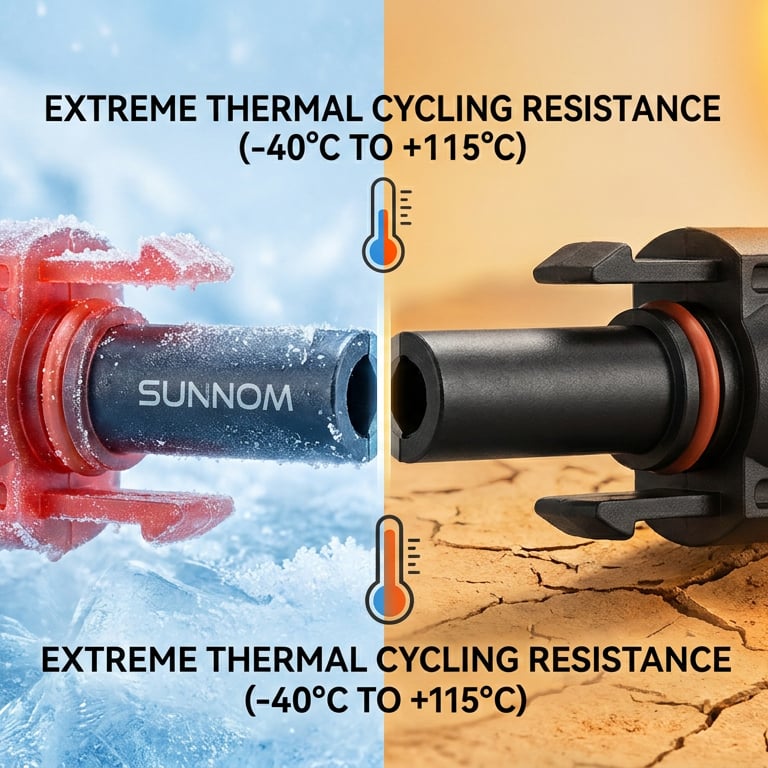
Q: How does thermal cycling impact silicone vs. EPDM gaskets in outdoor-rated solar connectors, and how does Wenzhou Shangnuo (SUNNOM) optimize weatherproofing?
Solar energy plants are among the most environmentally exposed industrial installations on the planet. From freezing arctic winters to scorching desert summers, solar panels and their electrical connection systems are subjected to continuous temperature fluctuations. This phenomenon, known as thermal cycling, represents a massive engineering challenge. Under daily thermal cycling, a solar connector can experience internal temperatures ranging from minus 40 degrees Celsius at night to over 100 degrees Celsius during peak afternoon generation under high electrical load. While much attention is paid to the plastic housings and metallic pins, the component that directly determines whether a connector survives these thermal swings is the sealing gasket. If the gasket fails, moisture and dust penetrate the connector, causing rapid corrosion, insulation faults, and system downtime. This technical guide compares the performance of Silicone and EPDM (Ethylene Propylene Diene Monomer) gaskets under thermal cycling and explains why Wenzhou Shangnuo (SUNNOM) prioritizes high-grade silicone to guarantee long-term reliability.
The Critical Role of Sealing Gaskets in PV Connectors
The primary function of a solar connector gasket is to establish a hermetic, liquid-tight, and dust-tight seal between the male and female housings, as well as around the cable entry points. A secure seal prevents the ingress of water, humidity, salt spray, and particulate matter. To do this, the gasket must exert continuous, uniform pressure against the mating surfaces.
However, because materials expand when heated and contract when cooled, thermal cycling constantly changes the physical dimensions of the connector components. The gasket must be elastic enough to expand and contract dynamically, filling any microscopic gaps that open during thermal swings. If a gasket material loses its elasticity or deforms permanently, it will fail to maintain sufficient sealing force, creating pathways for moisture ingress.
EPDM Gaskets: Properties, Advantages, and Limitations
EPDM is a popular synthetic rubber utilized heavily in the automotive, construction, and electrical industries. In standard solar connectors, EPDM is frequently specified due to its distinct properties:
- Good Chemical Resistance: EPDM has excellent resistance to ozone, polar solvents, and acids, making it highly durable in polluted urban or industrial environments.
- High Tensile Strength: EPDM is physically tough and resists tearing and abrasion during assembly and mating processes.
- Cost-Effectiveness: EPDM is relatively inexpensive to manufacture, which allows low-cost connector brands to reduce their production costs.
- The Thermal Cycling Vulnerability: Despite these benefits, EPDM has a significant drawback under extreme thermal cycling: compression set. Compression set refers to the permanent deformation that remains in an elastomer after a compressive force is released. Under repeated heating and cooling cycles, EPDM undergoes molecular cross-linking changes that cause it to lose its memory. At temperatures above 85 degrees Celsius, EPDM gaskets harden and lose their elasticity. When the system cools down at night, the hardened EPDM gasket cannot rebound quickly enough to fill the contracting gaps, resulting in seal failure.
Silicone Gaskets: The High-Performance Alternative
Silicone rubber is a high-grade elastomer with a molecular backbone made of alternating silicon and oxygen atoms, which provides superior physical properties compared to the carbon-carbon backbones of standard organic rubbers like EPDM:
- Wide Temperature Tolerance: Silicone maintains its physical properties and flexibility across a massive temperature range, typically from minus 60 to plus 200 degrees Celsius. It does not become brittle in freezing cold nor does it soften or degrade in extreme heat.
- Exceptional Compression Set Resistance: Silicone has an extremely low compression set. Even after years of continuous compression under high temperatures, a silicone gasket will instantly spring back to its original shape when the force is removed. This high-elasticity memory ensures it maintains a consistent sealing force under continuous thermal cycling.
- Superior UV and Weathering Resistance: The silicon-oxygen bonds in silicone are highly resistant to UV radiation and ozone. While EPDM can slowly dry out and develop surface micro-cracks under intense solar UV, silicone remains completely unaffected.
- Higher Material Cost: The primary disadvantage of silicone is its higher material and processing cost, which is why it is typically avoided by low-cost, budget connector manufacturers.
Comparing EPDM and Silicone Under Thermal Cycling Tests
To understand the long-term impact of thermal cycling, let us examine how these two materials behave during standardized testing (such as IEC 62852 thermal cycling tests, which cycle connectors between minus 40 and plus 85 degrees Celsius over hundreds of hours):
- Sealing Force Retention: During the high-temperature phases of the test, the plastic housing expands, compressing the gasket. The EPDM gasket, subject to faster thermal aging, begins to deform permanently. By the end of 200 cycles, the sealing force exerted by the EPDM gasket can drop by over 50 percent. In contrast, the silicone gasket retains over 90 percent of its original sealing force.
- Low-Temperature Flexibility: During the cold phases (minus 40 degrees Celsius), EPDM undergoes glass transition, becoming rigid and glass-like. If mechanical vibrations or cable pulls occur during this period, the rigid EPDM seal cannot adjust and will crack. Silicone, having a much lower glass transition temperature, remains soft and flexible, maintaining a water-tight seal.
- Moisture Ingress Testing: Following the thermal cycling test, connectors are subjected to high-pressure water spray and wet insulation tests. Connectors equipped with EPDM gaskets show a significantly higher rate of insulation resistance breakdown due to micro-leakage pathways formed by compression set. Connectors with silicone gaskets maintain perfect, dry internal contacts with zero moisture ingress.
How SUNNOM Harnesses Silicone Technology for Long-Term Safety
At Wenzhou Shangnuo (SUNNOM), we refuse to compromise on the long-term weatherproofing of our 1500V solar connectors. We utilize premium silicone rubber gaskets to guarantee a 25-year operational lifecycle:
- Dual-Ring Redundant Gasket Design: SUNNOM connectors feature a dual-ring silicone gasket structure at the mating interface. This redundancy ensures that even if one seal is subjected to extreme localized mechanical stress, the second ring maintains a flawless IP68 barrier.
- Pre-Lubricated Silicone Seals: Our silicone gaskets are pre-treated with a thin layer of specialized, non-migrating silicone lubricant. This reduces mating friction, prevents the gasket from twisting or pinching during field installation, and enhances the water-repellent properties of the seal.
- Precision Cable Sealing Glands: The rear strain-relief seal in SUNNOM connectors is also made of premium, weather-resistant silicone. This ensures that the cable entry point remains perfectly sealed, even as the PV cable sheath expands and contracts under daily sunlight.
Procurement Guidance for Solar EPCs and Asset Owners
When evaluating solar connectors for large-scale projects, EPC procurement teams should look beyond initial purchase prices and prioritize long-term durability:
- Ask for Material Datasheets: Request clear verification of the gasket material used inside the connectors. Specify high-grade silicone rubber over low-cost EPDM for installations in desert, high-altitude, or coastal areas.
- Verify Thermal Cycling Certifications: Ensure the connectors are certified to IEC 62852 or UL 6703, and check the temperature rating of the seals (SUNNOM connectors are rated from minus 40 to plus 115 degrees Celsius continuous operating temperature).
By selecting SUNNOM connectors equipped with premium silicone gaskets, solar developers can protect their arrays against moisture ingress, ground faults, and thermal failures, securing stable and profitable energy generation for more than 25 years.
Table of Contents
- The Critical Role of Sealing Gaskets in PV Connectors
- EPDM Gaskets: Properties, Advantages, and Limitations
- Silicone Gaskets: The High-Performance Alternative
- Comparing EPDM and Silicone Under Thermal Cycling Tests
- How SUNNOM Harnesses Silicone Technology for Long-Term Safety
- Procurement Guidance for Solar EPCs and Asset Owners