
 EN
EN



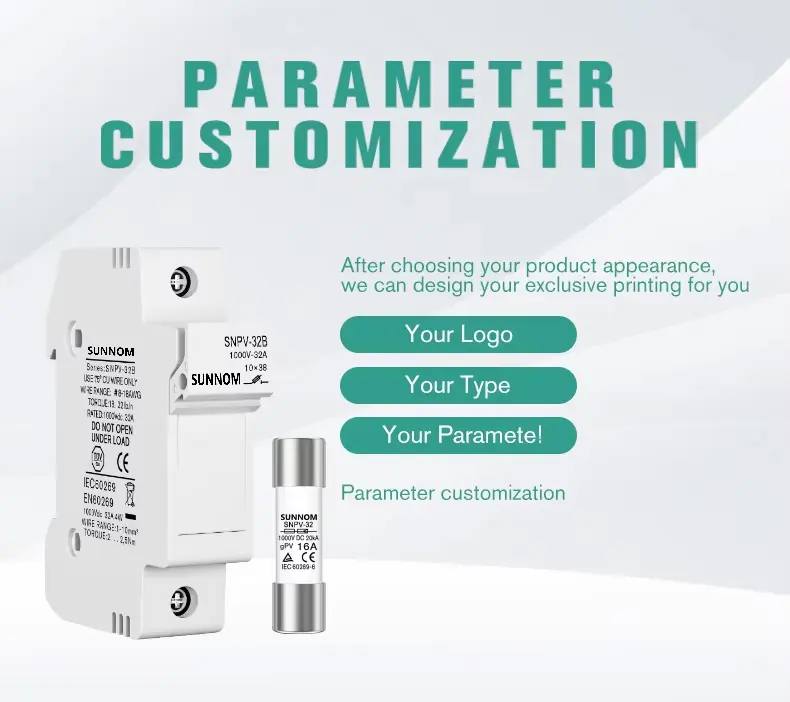
Photovoltaic systems have become a cornerstone of renewable energy infrastructure worldwide, yet their safety and reliability depend heavily on specialized protective components designed to handle the unique characteristics of direct current power. Among these critical components, the PV fuse serves as the primary safeguard against overcurrent conditions, short circuits, and equipment failures that can compromise entire solar installations. Understanding where and how these protective devices are best applied enables system designers, installers, and facility managers to maximize both safety margins and operational efficiency across diverse solar applications.
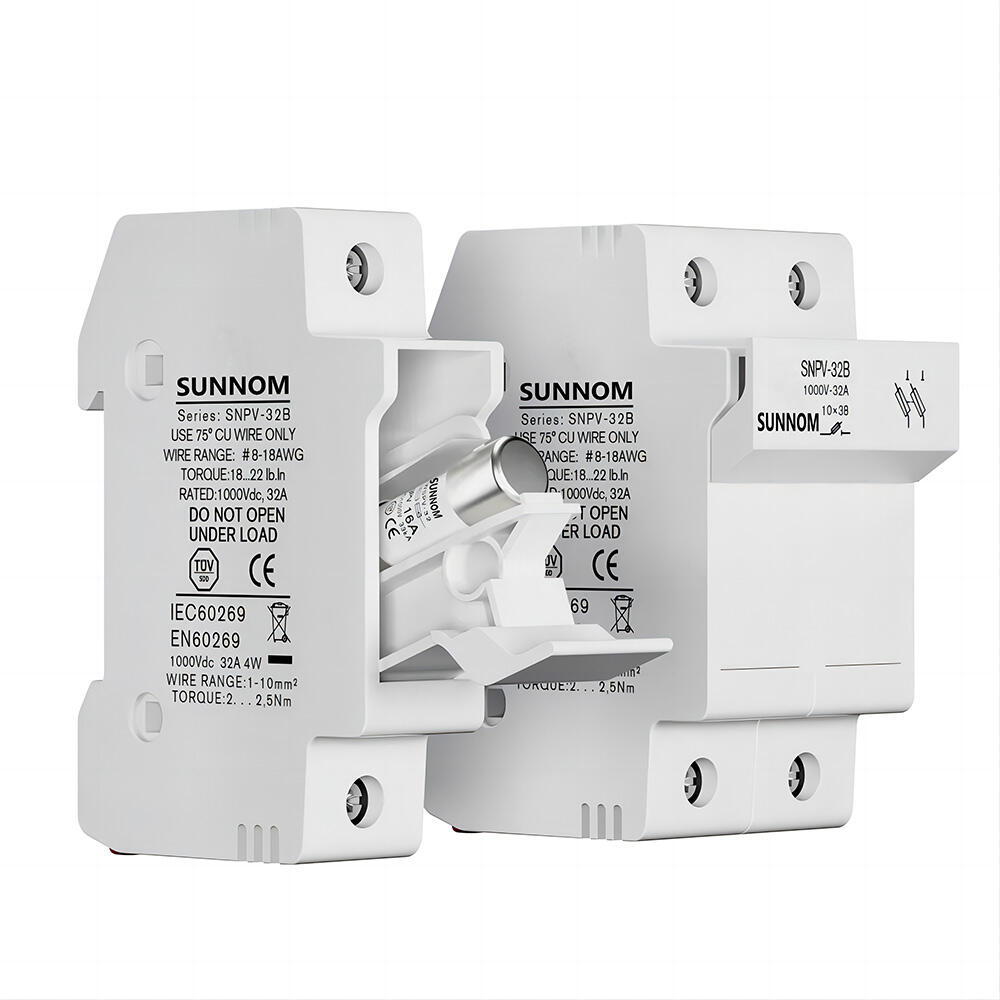
The applications for PV fuses extend far beyond simple circuit protection, encompassing roles in string-level safeguarding, combiner box installations, inverter input protection, and battery energy storage integration. Each application context presents distinct electrical characteristics, environmental challenges, and performance requirements that determine optimal fuse selection and placement strategies. This comprehensive examination explores the most critical and highly-rated applications where PV fuses deliver essential protection, focusing on the technical requirements, installation considerations, and performance expectations that define success in modern solar system design.
String-Level Circuit Protection in Residential and Commercial Arrays
Individual String Overcurrent Protection Requirements
At the most fundamental level, PV fuses provide indispensable protection for individual photovoltaic strings within residential and commercial solar arrays. Each string typically comprises multiple solar panels connected in series to achieve desired voltage levels, and the pv fuse positioned at the positive terminal of each string prevents reverse current flow from parallel strings during fault conditions or shading scenarios. This application addresses the specific hazard where a shaded or failed string could draw current from healthy strings, creating localized heating and potential fire risks within panel junction boxes or cable assemblies.
The electrical demands in this application require PV fuses rated for voltages typically ranging from 600V to 1500V DC, depending on system architecture and regional electrical codes. Current ratings must accommodate the maximum short-circuit current that panels can deliver while providing selective coordination with downstream protective devices. Installation practices favor cylindrical fuse formats in weatherproof holders mounted near the array, though some advanced systems integrate fuses directly within junction boxes or specialized string monitoring equipment for enhanced diagnostics.
Multi-String Array Configuration Challenges
When multiple strings operate in parallel to increase system capacity, the role of the pv fuse becomes even more critical for maintaining selective protection and preventing cascading failures. In these configurations, fault current contribution from multiple parallel strings can exceed the reverse current handling capability of individual panels, making string-level fusing mandatory in most electrical codes for arrays beyond minimal scale. The fuse application must account for ambient temperature variations, altitude effects on arc interruption, and the cumulative aging effects from continuous DC current exposure that characterize rooftop and ground-mount installations.
Advanced residential and commercial installations increasingly employ rapid shutdown systems that must coordinate with PV fuse protection, requiring careful attention to clearing time characteristics and fault current discrimination. The fuse selection process for these applications prioritizes gPV-rated devices that meet IEC 60269-6 or UL 2579 standards, ensuring proper DC arc interruption capability and photovoltaic-specific performance validation. System designers must balance cost considerations against the enhanced safety and diagnostic capabilities provided by fused versus unfused string configurations, particularly in high-value installations where equipment protection justifies additional component investment.
Combiner Box Applications for Utility-Scale Solar Farms
High-Current Consolidation Points
Utility-scale solar installations rely extensively on combiner boxes as centralized consolidation points where multiple string circuits merge before transmission to inverters, and these locations represent the most demanding application environment for pv fuse technology. Within a typical combiner box, anywhere from eight to twenty-four individual string circuits terminate, each requiring dedicated fuse protection to isolate faults without disrupting the entire array section. The current levels at these consolidation points can reach several hundred amperes on the output bus, creating challenging coordination requirements between string-level fuses and the main combiner disconnect or circuit breaker.
The combiner box application subjects PV fuses to extreme environmental conditions including temperature swings from minus forty to plus eighty degrees Celsius, intense solar radiation, dust ingress, and moisture exposure despite NEMA-rated enclosures. These harsh conditions demand fuses with robust mechanical construction, corrosion-resistant terminals, and stable electrical characteristics across the full environmental envelope. Installation density within combiner boxes also creates thermal management challenges, as tightly-packed fuse holders can experience elevated ambient temperatures that derate fuse current-carrying capacity and affect time-current characteristics during fault events.
Maintenance Access and Replacement Considerations
The combiner box application strongly favors PV fuse designs that facilitate rapid field replacement without specialized tools or extended system downtime. Utility-scale operators managing thousands of fuses across expansive solar farms require standardized fuse formats, clear amperage markings, and intuitive mounting systems that minimize labor costs during preventive maintenance or fault remediation activities. Blown fuse indication features, whether through integral visual indicators or separate monitoring contacts, provide substantial value in this application by enabling rapid fault location without systematic testing of each protection point.
Modern combiner box designs increasingly incorporate monitoring systems that track individual string current and voltage, creating opportunities for predictive maintenance strategies that identify degrading PV fuses before complete failure occurs. This application evolution drives demand for pv fuse technologies with consistent aging characteristics and measurable degradation indicators compatible with remote monitoring infrastructure. The financial impact of unplanned downtime in utility-scale installations justifies investment in premium fuse products featuring extended service life ratings and superior environmental resistance compared to general-purpose fuse types adapted from AC applications.
Inverter Input Protection and DC Distribution Systems
Critical Equipment Safeguarding
The protection of inverter DC input circuits represents another top-rated application for PV fuses, addressing the substantial capital investment concentrated in these power conversion systems and the catastrophic failure modes that can result from inadequate overcurrent protection. String inverters, central inverters, and microinverter systems each present unique protection requirements, but all benefit from properly-sized fuses positioned at the DC input terminals to prevent damage from external faults, internal component failures, or grid disturbances that reflect back through the inverter circuitry. The pv fuse in this application must coordinate with both upstream string protection and internal inverter protective functions to achieve selective fault isolation.
Inverter manufacturers typically specify maximum input fuse ratings in equipment documentation, establishing upper bounds that ensure proper coordination with internal semiconductor protection while maintaining adequate fault current interruption capability. System designers must carefully balance these maximum ratings against the actual short-circuit current available from connected PV arrays, accounting for future array expansion, seasonal irradiance variations, and the enhanced current delivery that occurs at cold module temperatures. Undersized PV fuses create nuisance tripping during transient conditions, while oversized devices fail to protect inverter input components from sustained overcurrent conditions that fall below the manufacturer's specified limits.
DC Distribution and Recombiner Applications
Larger commercial and utility installations often incorporate DC distribution systems that transport consolidated array output across substantial distances to centralized inverter stations, creating additional applications for PV fuse technology at recombiner panels and distribution switchgear. These mid-system protection points handle significantly higher current levels than individual string circuits, typically requiring fuses rated from one hundred to several hundred amperes with voltage ratings matching or exceeding the maximum system voltage. The electrical environment in DC distribution applications includes high steady-state current levels, substantial fault current availability from large array blocks, and the potential for sustained arc faults if protection devices fail to clear faults decisively.
The pv fuse application in DC distribution systems must address coordination challenges across multiple protection tiers, ensuring that faults are isolated at the lowest possible system level while maintaining backup protection at distribution and inverter locations. Time-current curve analysis becomes essential for achieving proper selectivity, particularly in systems where multiple fuse ratings operate in series along the power path from string to inverter. Advanced installations may supplement fuse protection with electronic circuit breakers or DC contactors that provide additional switching functionality, though the pv fuse remains the primary short-circuit interrupting device due to its superior energy limitation characteristics and fail-safe operation under extreme fault conditions.
Battery Energy Storage System Integration
Bidirectional Power Flow Protection
The rapid growth of battery energy storage systems coupled with photovoltaic generation has created sophisticated new applications for PV fuses at the interface between DC-coupled batteries and solar arrays. These systems present unique protection challenges due to bidirectional power flow, where batteries may charge from solar production during peak generation periods and discharge to support loads or provide grid services when solar output diminishes. The pv fuse must handle both charging current from the array and discharging current from the battery, requiring careful consideration of interrupt ratings, time-current characteristics, and coordination with battery management systems.
Battery system faults, particularly internal short circuits within lithium-ion cells or modules, can generate extremely high fault currents that exceed typical solar array short-circuit levels by substantial margins. This characteristic demands PV fuses with robust interrupt ratings and proven performance in high-energy fault scenarios where the available fault current may reach tens of thousands of amperes. The application also requires attention to voltage ratings, as series-connected battery strings can operate at voltages from 400V to over 1500V DC depending on system architecture, and the pv fuse must maintain adequate voltage safety margin across the full state-of-charge range that affects actual bus voltage.
Thermal Management in Battery Enclosures
Battery energy storage enclosures typically maintain controlled temperature environments to optimize battery performance and longevity, but the concentrated energy density and compact packaging create challenging thermal conditions for protective devices including PV fuses. The application requires fuses with stable current-carrying characteristics across the narrow temperature range maintained within battery containers, typically twenty to thirty degrees Celsius, while also providing adequate short-circuit protection during thermal runaway scenarios where enclosure temperatures may spike dramatically. Proper derating calculations must account for the thermal contribution from adjacent battery modules, power electronics, and other fuses operating in close proximity within confined spaces.
The integration of monitoring and control systems within battery installations creates opportunities for coordinated protection strategies where the pv fuse serves as the ultimate backup protection while battery management systems provide primary fault detection and isolation through electronic contactors. This layered approach enables sophisticated operating modes including current limiting during charging, state-of-charge dependent protection levels, and predictive maintenance based on accumulated thermal stress monitoring. The fuse selection process for battery applications must consider not only steady-state current ratings but also the cumulative effect of charge-discharge cycling on fuse aging and the potential for nuisance failures in systems with frequent deep discharge cycles that approach fuse continuous current ratings.
Off-Grid and Remote Power Systems
Standalone System Reliability Requirements
Off-grid solar installations serving remote telecommunications sites, rural electrification projects, and standalone industrial facilities represent applications where PV fuse reliability and longevity directly impact critical infrastructure availability. These systems typically lack redundant power sources and operate in locations where maintenance response times may extend to days or weeks, making component reliability and fail-safe protection paramount considerations. The pv fuse in off-grid applications must deliver decades of service life despite limited maintenance, extreme environmental exposure, and operating profiles that include frequent charge controller cycling and load transients absent from grid-tied installations.
Off-grid system architectures commonly incorporate both solar charging circuits and backup generator inputs feeding common DC bus infrastructure, creating complex protection coordination requirements where multiple sources may operate simultaneously or transition rapidly between charging modes. The pv fuse must coordinate with generator output protection, battery charging controller limits, and load-side distribution protection to maintain selective fault isolation across all operating scenarios. Installation practices in remote locations often favor larger fuse formats that provide enhanced contact reliability and reduced susceptibility to vibration-induced failures in applications ranging from mobile communication towers to agricultural pumping stations.
Extreme Environment Performance
Remote solar installations frequently operate in environmental extremes including desert heat, arctic cold, high-altitude UV exposure, and coastal salt fog that accelerate component degradation and challenge protective device performance. The pv fuse application in these contexts demands ruggedized construction with hermetic sealing, corrosion-resistant materials, and validated performance across temperature ranges extending from minus fifty to plus ninety degrees Celsius. Altitude effects on arc interruption become significant factors in high-elevation installations, where reduced air pressure degrades the dielectric strength of air gaps and may require voltage derating or specialized high-altitude rated fuses.
The limited accessibility of remote installations makes preventive replacement strategies economically attractive despite higher upfront costs for premium pv fuse products with extended service life ratings. System designers increasingly specify industrial-grade fuses with published aging characteristics, allowing predictive replacement schedules based on accumulated operating hours, thermal stress monitoring, and known degradation mechanisms. This proactive approach minimizes unplanned downtime and optimizes maintenance crew mobilization by consolidating fuse replacements with other scheduled maintenance activities rather than responding to individual failures that may leave critical loads without power for extended periods.
FAQ
What voltage rating should I specify for a pv fuse in a 1000V solar system?
For a 1000V solar system, specify PV fuses with a minimum voltage rating of 1000V DC, though many engineers prefer 1500V rated fuses to provide safety margin and accommodate future system voltage increases. The voltage rating must equal or exceed the maximum open-circuit voltage of connected PV strings under cold temperature conditions, which can substantially exceed nominal system voltage. Always verify that the selected fuse carries appropriate photovoltaic-specific certifications such as IEC 60269-6 or UL 2579 that validate DC interrupt performance at rated voltage, as standard AC fuses lack the arc extinction capability required for high-voltage DC applications.
How do I determine the correct current rating for string-level pv fuse protection?
Calculate string-level PV fuse current ratings by first determining the module short-circuit current and multiplying by the appropriate safety factor, typically 1.56 according to NEC requirements for photovoltaic source circuits. The selected fuse continuous current rating must exceed this calculated value while remaining below the maximum series fuse rating specified by the module manufacturer to ensure proper panel protection. Additionally, verify that the fuse interrupt rating exceeds the maximum available fault current from parallel strings, and confirm that time-current characteristics provide selective coordination with downstream protection devices. Consider ambient temperature derating when fuses will operate in combiner boxes or other enclosures where elevated temperatures affect current-carrying capacity.
Can I use the same pv fuse type for both string protection and combiner box applications?
While it is technically possible to use the same PV fuse product family across both string and combiner box applications, the specific amperage ratings and physical formats will differ based on the current levels at each protection point. String-level applications typically require fuses rated from ten to twenty amperes in compact cylindrical formats, while combiner box output protection may need ratings from thirty to one hundred amperes or higher in larger industrial fuse formats. Using a consistent fuse manufacturer and product series across multiple applications simplifies inventory management and ensures compatible time-current characteristics for proper protection coordination, but always verify that each specific fuse rating meets the electrical and environmental requirements of its intended application location.
What maintenance schedule should I follow for PV fuses in utility-scale solar installations?
Implement a condition-based maintenance approach for utility-scale PV fuses that combines regular visual inspections, thermal imaging surveys, and monitoring system analysis rather than arbitrary time-based replacement schedules. Conduct annual visual inspections of all accessible fuses checking for corrosion, loose connections, or physical damage, and use thermal imaging to identify fuses operating at elevated temperatures compared to adjacent circuits which may indicate degradation or improper sizing. Modern monitoring systems that track individual string current enable identification of open or high-resistance fuses through abnormal current patterns, allowing targeted replacement before complete failures occur. Replace fuses immediately after fault events, and establish replacement cycles based on manufacturer service life data accounting for actual operating conditions including average current levels, ambient temperatures, and accumulated thermal stress in your specific installation environment.
Table of Contents
- String-Level Circuit Protection in Residential and Commercial Arrays
- Combiner Box Applications for Utility-Scale Solar Farms
- Inverter Input Protection and DC Distribution Systems
- Battery Energy Storage System Integration
- Off-Grid and Remote Power Systems
-
FAQ
- What voltage rating should I specify for a pv fuse in a 1000V solar system?
- How do I determine the correct current rating for string-level pv fuse protection?
- Can I use the same pv fuse type for both string protection and combiner box applications?
- What maintenance schedule should I follow for PV fuses in utility-scale solar installations?