
 EN
EN



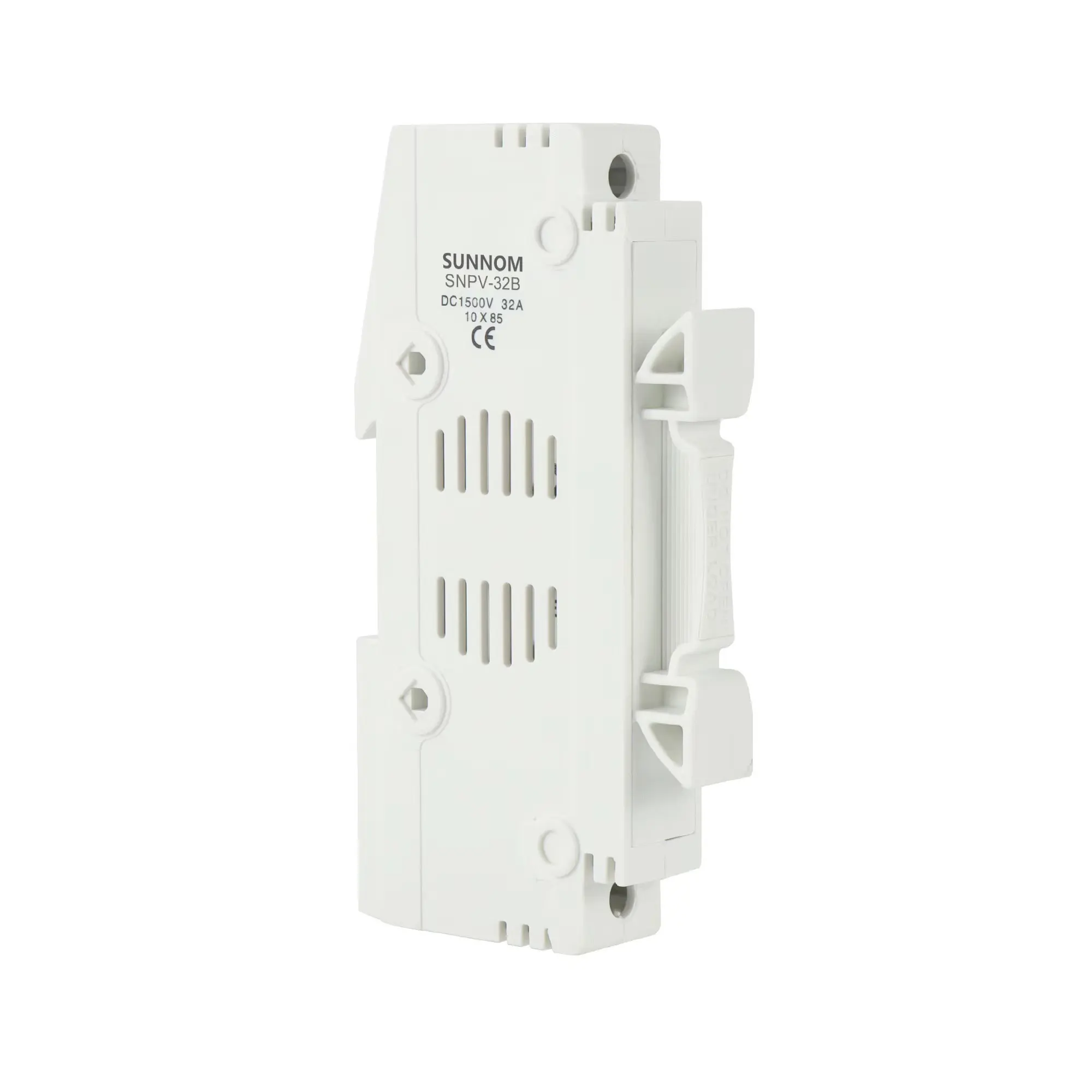
Commercial solar installations represent significant capital investments, and any unplanned downtime translates directly into revenue loss and operational disruption. The question of whether a properly specified PV fuse can prevent system downtime is not merely theoretical—it addresses a critical pain point for facility managers, solar asset owners, and energy procurement professionals. Understanding the protective role of overcurrent devices in photovoltaic arrays requires examining both the technical mechanisms of fault isolation and the broader system design principles that determine reliability in commercial-scale deployments.
The answer is nuanced but affirmative: a correctly rated and positioned PV fuse can substantially reduce system downtime by isolating faults before they cascade into broader failures, though its effectiveness depends on comprehensive system design, proper sizing, and integration with other protective devices. In commercial installations where array sizes often exceed hundreds of kilowatts, the strategic deployment of fusing at string and combiner levels creates defensive layers that contain electrical faults, prevent equipment damage, and minimize the scope of service interruptions. This protection architecture becomes particularly valuable in environments where maintenance response times may be measured in hours rather than minutes, and where the cost of extended outages can exceed the initial investment in robust overcurrent protection.
Understanding Fault Scenarios in Commercial PV Systems
Common Electrical Faults That Threaten Uptime
Commercial photovoltaic installations face multiple fault scenarios that can compromise system availability if not properly managed. Ground faults represent one of the most frequent challenges, occurring when current finds an unintended path to earth through damaged insulation, moisture ingress, or mechanical damage to conductors. These faults can persist at relatively low current levels that may not trigger upstream breakers but can gradually degrade system components and create fire hazards. String-to-string faults present another significant risk, particularly in combiner box environments where multiple parallel circuits converge. When insulation fails between adjacent strings operating at different voltage potentials, high fault currents can flow that exceed the interrupting capacity of improperly specified protection devices.
Module-level failures introduce additional complexity, as internal cell defects or bypass diode failures can create localized heating and potential arc fault conditions. In commercial arrays with hundreds or thousands of modules, the statistical probability of such failures increases proportionally with system size. Reverse current conditions also pose threats when shaded or failed strings become current sinks rather than sources, potentially leading to hot spot formation and accelerated degradation. Each of these fault types presents distinct current signatures and time profiles that influence the selection and coordination of protective devices throughout the DC collection system.
The Financial Impact of Unplanned Downtime
For commercial solar installations operating under power purchase agreements or participating in renewable energy credit markets, every hour of lost generation carries quantifiable financial consequences. A 500 kW commercial rooftop system experiencing a full day of downtime during peak production months may forfeit $300 to $800 in direct energy revenue, depending on local utility rates and solar resource quality. Beyond immediate generation losses, extended outages can trigger performance guarantee penalties in third-party ownership structures, create gaps in renewable energy certificate qualification periods, and damage the operational track record that influences financing terms for portfolio expansion.
The indirect costs of system failures often exceed direct revenue losses when considering emergency service dispatch fees, expedited component replacement costs, and the administrative burden of insurance claims and performance reporting adjustments. Commercial installations without robust fault isolation capabilities may experience cascading failures where a single string fault progressively damages combiner equipment, inverters, or even adjacent strings before protection devices operate. These compound failures extend repair timelines from hours to days or weeks, particularly when specialized replacement components must be sourced. The business case for investing in proper pv fuse protection becomes compelling when these comprehensive downtime costs are quantified and compared against the incremental cost of enhanced protective infrastructure.
How PV Fuses Provide Fault Isolation and System Protection
The Mechanism of Overcurrent Interruption
A pv fuse operates through a fundamentally simple but precisely engineered mechanism: a calibrated fusible element designed to melt and interrupt current flow when thermal accumulation exceeds rated thresholds. In photovoltaic applications, this protection must accommodate the unique characteristics of DC arc interruption, where the absence of natural current zero-crossings requires specialized arc-quenching chamber designs. When fault current flows through the pv fuse element, resistive heating increases proportionally to the square of current magnitude. Once the element reaches its melting point, a controlled arc forms within the fuse body, initially maintaining current continuity but rapidly elongating as vaporized metal creates a high-resistance plasma channel.
Modern solar-rated fuses incorporate sand or ceramic filler materials that absorb arc energy and promote rapid deionization, collapsing the conductive plasma path and establishing a durable open circuit. The time-current characteristic curve of each pv fuse variant defines the precise relationship between fault magnitude and clearing time, with inverse-time behavior providing fast interruption for high-magnitude shorts while tolerating transient surge currents that occur during normal cloud-edge transitions and module temperature variations. This selective response prevents nuisance operations that would otherwise create false downtime events while ensuring decisive action during genuine fault conditions.
Strategic Placement in Commercial System Architecture
The protective value of pv fuse devices depends critically on their placement within the DC collection hierarchy. In string-level applications, individual fuses protect each series-connected module chain against reverse current and provide isolation during maintenance activities. This granular protection limits fault impact to a single string, allowing the remainder of the array to continue operating during component replacement or troubleshooting. Combiner-level fusing creates a second protective layer, with each incoming string protected by its own pv fuse ahead of the parallel bus connection. This architecture prevents a faulted string from drawing reverse current from healthy strings and isolates combiner box failures from propagating back into individual string circuits.
In large commercial installations, multiple combiners feed into centralized inverter stations or DC collection networks, creating additional opportunities for strategic fuse placement. Main DC disconnect switches often incorporate high-capacity fusing to protect inverter DC input stages and provide a final layer of overcurrent protection before power conversion equipment. The coordination between these protective layers requires careful analysis to ensure that the downstream pv fuse always operates before upstream devices during fault conditions, creating a deterministic fault isolation hierarchy. This selectivity analysis must account for the impedance characteristics of cables, connectors, and the solar array itself, recognizing that available fault current varies with irradiance levels, temperature, and the specific location of faults within the distributed DC network.
Voltage Rating and DC Interruption Challenges
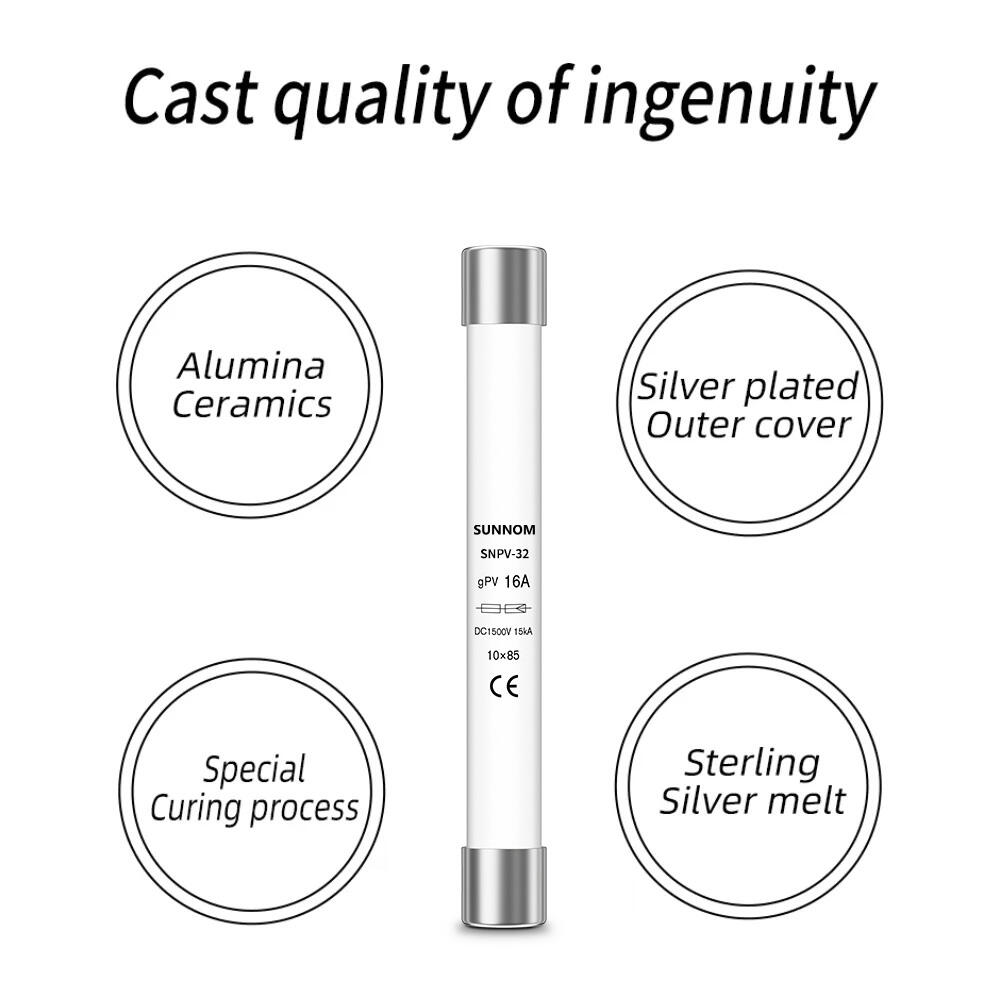
Commercial solar installations increasingly operate at elevated DC voltages to minimize resistive losses and reduce conductor costs across extensive array fields. Systems designed for 1000V or 1500V DC operation present heightened challenges for overcurrent protection, as arc voltage during interruption scales with system voltage and available fault energy increases dramatically. A pv fuse rated for these voltage levels must demonstrate both adequate voltage withstand during normal operation and robust arc interruption capability under worst-case fault scenarios. The voltage rating stamped on each fuse represents the maximum circuit voltage at which the device can safely interrupt fault current and maintain electrical isolation without reigniting or experiencing dielectric breakdown.
Underrating the voltage specification of protective devices represents one of the most common and consequential design errors in commercial solar installations. A pv fuse with insufficient voltage rating may initially interrupt fault current but subsequently experience restrike as the arc re-establishes across the molten element gap, creating a sustained arcing fault condition that can catastrophically damage combiner equipment and create fire hazards. Proper specification requires matching the pv fuse voltage rating to the maximum open-circuit voltage of the protected circuit under worst-case cold temperature conditions, recognizing that module Voc increases significantly as cell temperature drops below standard test conditions.
Coordination With Other System Protection Elements
Integration With Inverter Protection Functions
Modern commercial inverters incorporate sophisticated monitoring and protection algorithms that complement the passive overcurrent protection provided by pv fuse devices. Ground fault detection systems continuously measure DC leakage current and can command system shutdown when thresholds are exceeded, providing protection against insulation failures that may not generate sufficient fault current to operate fuse devices. Arc fault detection circuitry analyzes high-frequency noise signatures characteristic of series arcing conditions, enabling detection of loose connections and progressive insulation failures before they develop into full fault conditions. These active protection systems reduce the frequency of fault conditions that reach pv fuse operating thresholds, but they cannot replace the physical current interruption capability that fuses provide during high-magnitude short circuits.
The coordination between pv fuse protection and inverter-based monitoring requires careful consideration of response times and fault current magnitudes. Inverter shutdown commands typically require 100 to 300 milliseconds to execute, during which fault currents continue flowing through the DC collection system. For high-magnitude faults that generate currents exceeding ten times rated values, properly sized fuses may clear in under 100 milliseconds, providing faster protection than inverter-initiated shutdown sequences. This complementary relationship means that each protection layer addresses distinct portions of the fault spectrum: pv fuse devices handle high-magnitude overcurrent events requiring immediate physical interruption, while inverter systems manage lower-level ground faults, insulation degradation, and abnormal operating conditions that develop over longer timeframes.
Relationship to System Grounding and Earthing
The grounding architecture of commercial solar installations profoundly influences both the magnitude of available fault current and the effectiveness of pv fuse protection. Ungrounded DC systems, increasingly common in commercial applications, present unique protection challenges as ground faults do not generate high-magnitude fault currents until a second ground fault occurs at a different potential point. In this configuration, pv fuse devices primarily protect against string-to-string faults and reverse current conditions, while ground fault detection systems provide primary protection against insulation failures. The first ground fault in an ungrounded system may go undetected by passive overcurrent devices, making robust monitoring systems essential complements to fuse protection.
Solidly grounded systems, more common in older commercial installations, create high-magnitude ground fault currents that reliably operate appropriately sized pv fuse devices. However, this grounding approach introduces additional complexity in coordination studies, as fault current magnitude varies significantly depending on fault location within the array. A ground fault near the inverter may generate currents limited primarily by cable impedance and capable of exceeding 1000 amperes, while a fault at the far end of a string may be limited by the module short-circuit current rating. Effective protection design must account for this variation, sizing pv fuse devices to protect conductors and equipment under minimum fault current scenarios while ensuring adequate interrupting capacity for maximum fault conditions.
Practical Implementation Considerations for Commercial Deployments
Sizing Methodology and Current Rating Selection
Proper sizing of pv fuse protection requires systematic analysis of both continuous current requirements and fault current scenarios. The starting point for any sizing calculation is the module short-circuit current specification, as this parameter defines the maximum current that each string can generate under fault or reverse-feed conditions. National Electrical Code guidelines and IEC standards provide specific multiplication factors that account for irradiance variations, soiling conditions, and long-term degradation, typically requiring fuse ratings to accommodate 156% of the module short-circuit current for continuous operation without nuisance clearing. This derating ensures that the pv fuse tolerates legitimate surge currents during rapid irradiance transitions while maintaining thermal stability during sustained high-output periods.
Beyond continuous current handling, the interrupting rating of each pv fuse must exceed the maximum available fault current at its installation location. In combiner box applications where multiple strings parallel together, the potential fault current equals the sum of short-circuit contributions from all healthy strings feeding into a faulted circuit. A combiner serving ten parallel strings of modules rated at 11 amperes Isc each must employ pv fuse devices with interrupting ratings exceeding 110 amperes at the system operating voltage. This calculation becomes more complex in large commercial arrays with multiple combiner levels and long cable runs that introduce impedance limiting effects. Comprehensive protection studies may employ sophisticated modeling tools that account for cable resistance, connector contact resistance, and temperature coefficients to accurately predict fault current magnitudes throughout the DC collection network.
Environmental Factors and Enclosure Selection
Commercial solar installations subject protective equipment to harsh environmental conditions that can degrade performance and reliability if not properly addressed in system design. Rooftop installations expose combiner boxes and their internal pv fuse components to extreme temperature swings, with enclosure interior temperatures potentially exceeding 75°C during summer peak periods. Since fuse operating characteristics shift with ambient temperature—with clearing times decreasing as temperature rises—proper derating calculations must account for worst-case thermal environments. Some manufacturers provide temperature correction curves that guide appropriate rating adjustments for high-temperature installations, ensuring that pv fuse devices maintain their specified time-current characteristics across the full operating temperature range.
Humidity, dust infiltration, and corrosive atmospheres present additional challenges for pv fuse reliability in commercial deployments. Coastal installations or industrial environments with airborne contaminants require enclosures with appropriate ingress protection ratings and corrosion-resistant materials. The fuse holders and connection hardware warrant particular attention, as contact resistance increases with oxidation and can lead to localized heating that prematurely degrades pv fuse elements or creates false open circuits. High-quality fuse holders incorporate spring-loaded contacts with precious metal plating that maintain low contact resistance over extended service life, reducing maintenance requirements and improving long-term system reliability.
Maintenance Protocols and Operational Monitoring
While pv fuse devices provide passive protection without requiring active power or communication connections, they do require periodic inspection and testing to ensure continued reliability. Commercial installation maintenance protocols should include regular thermal imaging surveys of combiner boxes and disconnect equipment, as abnormal heating patterns can indicate developing contact resistance issues, undersized conductors, or pv fuse elements approaching their end of service life. String current monitoring systems, increasingly standard in commercial installations, provide valuable operational data that can identify gradually increasing impedance suggesting fuse degradation or holder contact issues before complete failure occurs.
When pv fuse replacement becomes necessary following a fault event or as part of preventive maintenance, proper procedure requires both the failed device and any adjacent fuses in the same thermal environment to be replaced as a group. This practice recognizes that thermal stress and aging effects impact multiple devices simultaneously, and that mixed populations of new and aged fuses can create coordination problems where aging devices operate prematurely under normal surge conditions. Documentation of all pv fuse operations and replacements contributes to system reliability trending analysis, helping operators identify recurring fault patterns that may indicate design deficiencies, component quality issues, or environmental stress factors requiring broader corrective action beyond simple device replacement.
Real-World Performance and Downtime Prevention Effectiveness
Case Analysis of Protected Versus Unprotected System Failures
Field experience from commercial solar portfolios provides compelling evidence of the downtime prevention value delivered by properly implemented pv fuse protection. In one documented case involving a 1.2 MW commercial rooftop installation, a module junction box failure created a short circuit within a single string during afternoon peak production. The string-level pv fuse cleared in approximately 50 milliseconds, isolating the faulted circuit while the remaining 47 strings in the array continued normal operation. System monitoring detected the fault through string current imbalance alarms, but the array maintained 98% of rated capacity until maintenance crews could safely access the roof and replace the damaged module the following morning. The total energy loss from this fault event was limited to approximately 15 kWh—less than two hours of production from the affected string.
In contrast, a comparable installation lacking string-level fuse protection experienced catastrophic cascading failure when a similar module fault occurred. Without individual string isolation capability, the fault current sourced from parallel strings flowed through undersized combiner wiring, generating sufficient heat to damage multiple conductor terminations and eventually triggering the inverter ground fault protection system. The resulting damage required complete combiner box replacement, rewiring of six string circuits, and inverter DC input stage repair. The system remained offline for four days while replacement parts were sourced and repairs completed, resulting in approximately 6,800 kWh of lost generation and repair costs exceeding $18,000. This comparison illustrates the asymmetric risk profile: the incremental cost of comprehensive pv fuse protection represents a small fraction of potential failure costs when protective devices are absent or improperly specified.
Quantifying Reliability Improvement Metrics
Reliability engineering frameworks provide systematic approaches to quantifying the downtime prevention benefits of protective infrastructure. Mean time between failures and mean time to repair represent key metrics that characterize system availability. The implementation of properly coordinated pv fuse protection primarily impacts MTTR by limiting fault scope and enabling continued operation of unaffected array sections during repair activities. In commercial installations with typical maintenance response times of 24 to 48 hours, this fault containment can reduce average repair downtime from days to hours by preventing cascade failures and enabling rapid fault localization through string-level monitoring.
Statistical analysis of large commercial solar portfolios demonstrates measurable reliability improvements attributable to enhanced protective architecture. Fleet operators managing hundreds of commercial installations report that sites with comprehensive string-level and combiner-level pv fuse protection experience 40 to 60 percent fewer full-system outage events compared to installations relying solely on inverter-level protection. More significantly, the average energy loss per fault event drops by 75 to 85 percent when granular fault isolation limits outages to individual strings rather than entire array sections. These operational metrics translate directly to improved project economics through higher capacity factors, reduced operations and maintenance spending, and enhanced asset valuations when sites undergo refinancing or portfolio sales.
Integration With Predictive Maintenance Strategies
Advanced commercial solar operators increasingly leverage data analytics and machine learning algorithms to transition from reactive to predictive maintenance models. In this context, pv fuse protection systems contribute valuable operational data that feeds predictive models. String current monitoring enables detection of gradual performance degradation that may indicate developing faults before they reach magnitudes requiring fuse operation. Sudden changes in string impedance characteristics, visible through high-frequency monitoring of voltage and current relationships, can signal insulation degradation or connection integrity issues that predictive models flag for preemptive inspection.
The integration of thermal monitoring with string-level electrical data creates additional predictive capabilities. Combiner boxes exhibiting gradually increasing operating temperatures relative to ambient conditions may indicate elevated contact resistance in pv fuse holders or compression connectors—conditions that predictive maintenance algorithms can identify weeks or months before they progress to failure events. This early warning capability enables scheduled maintenance during planned outage windows rather than emergency response scenarios, further reducing downtime impact and associated revenue losses. The synergy between passive protective devices like pv fuse elements and active monitoring systems represents a comprehensive approach to commercial solar reliability that addresses both immediate fault interruption needs and long-term asset management optimization.
FAQ
What happens to a commercial solar system when a PV fuse operates during a fault?
When a pv fuse operates in response to a fault condition, it creates an open circuit that immediately stops current flow in the affected string or circuit path. In systems with string-level fusing, only the faulted circuit is isolated, allowing all other strings to continue generating power and feeding the inverter. The system monitoring equipment typically detects the current imbalance and generates alerts notifying operators of the fault condition. Total system output decreases proportionally to the number of affected strings, but the installation continues producing revenue from all healthy circuits. Modern commercial inverters continue operating normally as long as minimum input voltage and power thresholds are maintained, which remains true even with multiple string outages in large arrays. The isolated fault cannot propagate to adjacent equipment, and maintenance personnel can safely access and repair the affected circuit while the remainder of the system operates under load.
How often do PV fuses require replacement in commercial installations under normal operating conditions?
Under normal operating conditions without fault events, properly specified pv fuse devices in commercial solar installations can remain in service for the entire system lifetime of 25 to 30 years without requiring replacement. Quality solar-rated fuses experience minimal degradation when operated within their voltage and current ratings, as they maintain temperatures well below the threshold that causes metallurgical changes to the fusible element. However, fuses that have experienced partial fault conditions—where current approached but did not reach the melting threshold—should be replaced during scheduled maintenance, as repeated thermal stress can alter their time-current characteristics. In practice, commercial system operators typically replace pv fuse devices opportunistically during combiner box service activities or when other components require attention, treating them as low-cost insurance against future fault scenarios. Installations in harsh environments with extreme temperature cycling or corrosive atmospheres may benefit from more frequent inspection and proactive replacement every 10 to 15 years, though actual device degradation remains minimal in most commercial deployment conditions.
Can a commercial solar system operate safely with a blown PV fuse until repairs can be scheduled?
Yes, a commercial solar installation can and should continue operating with one or more blown pv fuse devices until scheduled maintenance can address the underlying fault and restore full system capacity. The operated fuse has successfully performed its protective function by isolating a fault condition, and the open circuit it creates provides ongoing protection against further fault propagation. The remainder of the array continues normal operation, and the inverter adjusts to the reduced input power without requiring shutdown or manual intervention. However, operators should prioritize fault investigation and repair rather than indefinitely deferring maintenance, as the root cause that triggered the fuse operation—whether a damaged module, cable fault, or connector failure—likely represents a continued safety hazard and potential failure propagation risk. Some jurisdictions and insurance policies may impose maximum timeframes between fault detection and repair completion, typically ranging from 48 hours to 30 days depending on fault severity and safety implications. Modern monitoring systems enable remote fault assessment that helps operators prioritize repair urgency based on fault type and location within the DC collection system.
What are the most common mistakes in PV fuse selection that compromise downtime prevention in commercial systems?
The most prevalent error in commercial solar protection design is undersizing the voltage rating of pv fuse devices relative to the maximum system open-circuit voltage under cold temperature conditions. This mistake creates catastrophic failure risk when operated fuses experience arc re-strike and sustained arcing that damages combiner equipment far beyond the initial fault scope. A second common mistake involves selecting fuse current ratings that are too low, resulting in nuisance operations during legitimate high-irradiance periods or cloud-edge transients—creating false downtime events that erode the business case for solar investment. Conversely, oversizing current ratings beyond the conductor ampacity protection requirements can allow cable damage during fault conditions before the fuse operates. Another frequent error involves mixing pv fuse types or manufacturers within the same combiner, creating unpredictable coordination behavior and potential for selective failures that leave faults partially unprotected. Finally, many commercial installations fail to properly document the specifications and locations of installed protective devices, creating confusion during fault investigations and increasing the risk that replacement fuses with incorrect ratings are installed during field repairs.
Table of Contents
- Understanding Fault Scenarios in Commercial PV Systems
- How PV Fuses Provide Fault Isolation and System Protection
- Coordination With Other System Protection Elements
- Practical Implementation Considerations for Commercial Deployments
- Real-World Performance and Downtime Prevention Effectiveness
-
FAQ
- What happens to a commercial solar system when a PV fuse operates during a fault?
- How often do PV fuses require replacement in commercial installations under normal operating conditions?
- Can a commercial solar system operate safely with a blown PV fuse until repairs can be scheduled?
- What are the most common mistakes in PV fuse selection that compromise downtime prevention in commercial systems?