
 EN
EN



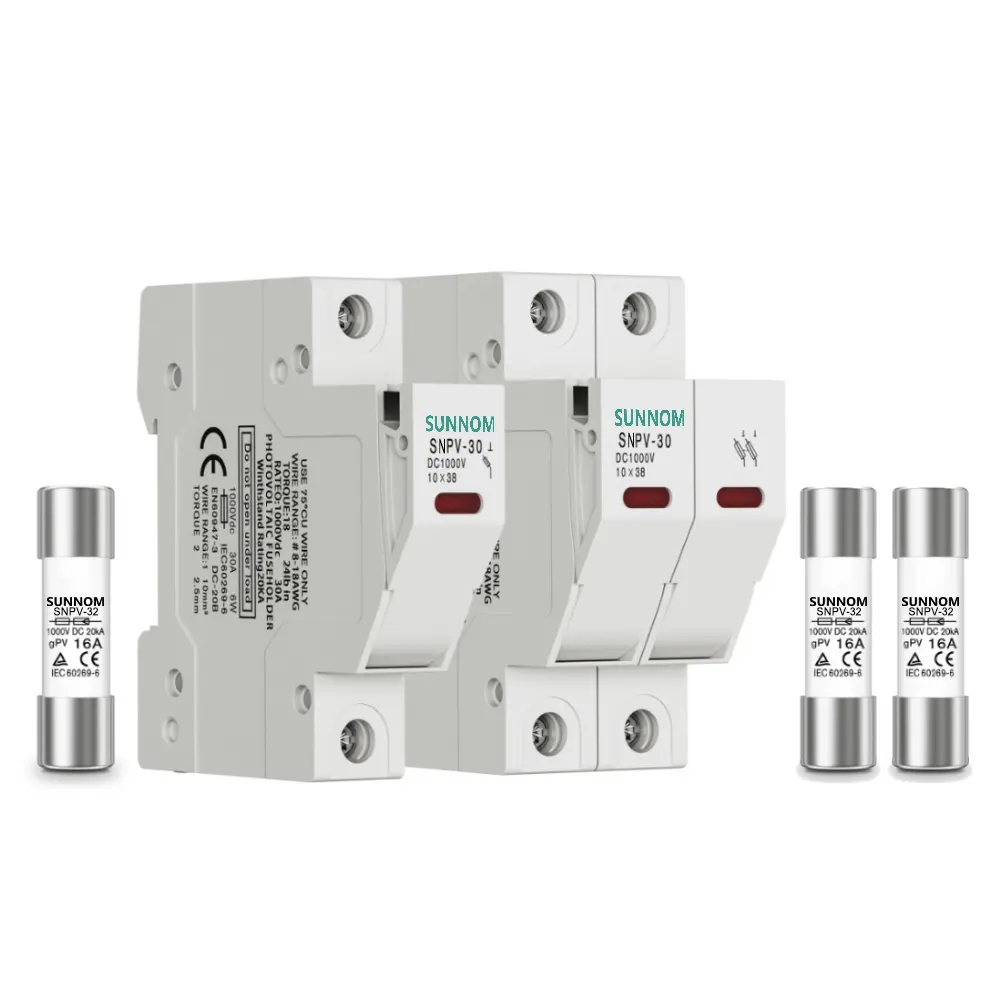
Solar photovoltaic systems rely on multiple protective components to ensure safe and efficient operation, with the PV fuse serving as a critical safeguard against overcurrent conditions that could damage modules, cables, or inverters. While these protective devices are designed for reliability and longevity, their performance can degrade over time due to environmental exposure, electrical stress, and operational conditions unique to solar installations. Understanding which maintenance checks are essential for PV fuse performance enables system owners, installers, and maintenance technicians to prevent costly failures, maintain system uptime, and ensure continuous protection throughout the installation's lifespan. Regular inspection protocols tailored to photovoltaic applications address the specific challenges these fuses face in outdoor, high-voltage DC environments where traditional AC fuse maintenance practices may not apply.
Maintenance checks for PV fuse systems differ significantly from conventional electrical installations because solar arrays operate continuously during daylight hours, experience wide temperature fluctuations, and handle direct current with unique arc suppression requirements. The essential checks encompass visual inspections for physical damage and environmental degradation, electrical measurements to verify proper contact resistance and voltage ratings, thermal assessments to detect overheating conditions, and mechanical evaluations of mounting hardware and connection integrity. These maintenance activities must be performed at appropriate intervals based on system size, environmental conditions, and manufacturer recommendations, with documentation protocols that support warranty compliance and predictive maintenance strategies. Establishing a comprehensive maintenance framework specifically designed for pv fuse installations protects the substantial investment in solar infrastructure while maximizing energy production and safety performance.
Visual Inspection Protocols for PV Fuse Components
External Housing and Environmental Damage Assessment
The first essential maintenance check involves thorough visual examination of the pv fuse housing and surrounding enclosure for signs of environmental degradation that commonly affect outdoor solar installations. Inspectors should look for discoloration, cracking, or warping of the fuse body, which may indicate exposure to excessive heat cycles or UV radiation that compromises the protective casing. Moisture ingress represents a particularly serious concern, as even minor condensation inside combiner boxes can create conductive paths that bypass the fuse protection or cause corrosion of contact surfaces. Check weatherproofing seals, gaskets, and any cable entry points for deterioration, paying special attention to installations in coastal environments where salt spray accelerates corrosion, or desert regions where extreme temperature swings stress materials beyond normal limits.
Physical damage from wildlife, vegetation growth, or maintenance activities should be documented during visual inspections, as seemingly minor scratches or dents can create entry points for moisture or indicate structural weakness. Examine mounting brackets and panel attachment points for rust, loosening, or mechanical stress that could affect the electrical connections or allow vibration-induced wear. The condition of labeling and identification markings provides insight into UV exposure levels, with faded or illegible labels suggesting replacement may be necessary even if the fuse element itself remains functional. For installations with multiple pv fuse positions within a combiner box, compare the appearance of individual units to identify any that show disproportionate signs of stress, which may indicate localized issues with string current imbalance or inadequate ventilation affecting specific positions.
Connection Point and Terminal Condition Verification
Careful inspection of all electrical connection points represents a critical maintenance check because high-resistance joints create localized heating that degrades pv fuse performance and can lead to catastrophic failure. Examine both input and output terminals for discoloration, which typically appears as brown or black marks indicating past overheating events that have oxidized the contact surfaces. Look for signs of arcing, which manifests as pitting, metal splatter, or carbonization around terminal areas, suggesting the fuse has experienced fault conditions or that connection torque was insufficient during installation. Loose connections not only increase resistance but also allow micro-movements that wear away protective platings and accelerate corrosion in the presence of moisture or airborne contaminants.
Check the integrity of wire insulation near connection points, as heat from poor contacts often damages cable jackets before visible terminal damage occurs, providing an early warning sign that maintenance intervention is needed. Verify that all terminal screws or compression fittings meet manufacturer-specified torque values, using a calibrated torque wrench rather than relying on visual assessment alone, since proper contact pressure is essential for maintaining low resistance in high-current DC applications. Inspect for evidence of creep, the gradual deformation of softer materials under sustained pressure that can reduce contact force over time, particularly in aluminum conductors or brass terminal blocks exposed to thermal cycling. Any signs of overheating, discoloration, or mechanical looseness at connection points warrant immediate corrective action, as these conditions directly compromise the protective function of the pv fuse and create fire hazards that escalate with continued operation.
Electrical Performance Testing and Measurement Procedures
Voltage Drop and Contact Resistance Measurements
Essential electrical maintenance checks for pv fuse installations include precision measurements of voltage drop across the fuse body during operation, which reveals the condition of internal elements and contact surfaces that cannot be assessed through visual inspection alone. Using a high-resolution digital multimeter with millivolt accuracy, measure the potential difference between input and output terminals while the string is generating current under normal operating conditions. A properly functioning pv fuse typically exhibits voltage drops in the range of 100 to 300 millivolts depending on current level and fuse rating, with values significantly above this range indicating increased resistance from aging, oxidation, or manufacturing defects that reduce efficiency and generate unnecessary heat.
Contact resistance testing provides complementary diagnostic information by measuring the electrical resistance of the complete fuse assembly when disconnected from the circuit, eliminating the influence of string voltage and allowing precise characterization of the fuse itself. This measurement requires specialized microhmmeter equipment capable of passing test currents through the device while measuring resistance values typically in the range of a few milliohms to tens of milliohms for standard solar fuse ratings. Document baseline resistance values during initial installation or system commissioning, then compare subsequent measurements to identify gradual degradation trends that suggest approaching end-of-life conditions. Resistance increases of more than twenty percent from baseline values generally warrant fuse replacement, even if the device has not operated, because this indicates internal degradation that will accelerate under fault conditions and may prevent proper operation when protection is actually needed.
Insulation Resistance and Leakage Current Testing
Comprehensive pv fuse maintenance protocols must include insulation resistance testing to verify that the fuse assembly maintains proper electrical isolation from grounded enclosures and between phases in multipole configurations. Using a megohmmeter or insulation tester, apply the appropriate test voltage based on system operating voltage, typically 500V DC for systems rated up to 600V and 1000V DC for higher-voltage installations, measuring resistance between all current-carrying parts and the grounded combiner box or mounting structure. Insulation resistance should exceed several hundred megohms for new installations, with minimum acceptable values above ten megohms for aged systems, though local electrical codes may specify different thresholds based on voltage class and installation environment.
Leakage current measurements complement insulation testing by detecting active current paths that may not register as low resistance but still indicate deteriorating insulation or contamination buildup. With the string disconnected but the fuse installed, measure any current flow between terminals and ground using a microammeter or clamp meter with sufficient sensitivity, looking for readings that should be in the single-digit microampere range for properly maintained equipment. Elevated leakage currents suggest moisture ingress, tracking across contaminated surfaces, or insulation breakdown that creates safety hazards and may trigger ground fault protection devices unnecessarily. Both insulation resistance and leakage current measurements should be performed during cool, dry conditions for baseline documentation, then repeated during hot, humid conditions to assess worst-case performance, as environmental factors significantly influence these parameters in outdoor pv fuse installations exposed to morning dew, rain, and temperature extremes.
Thermal Analysis and Temperature Monitoring Techniques
Infrared Thermography for Hot Spot Detection
Thermal imaging represents one of the most valuable non-invasive maintenance checks for identifying developing problems in pv fuse installations before they progress to failure, as excess heat generation reliably indicates increased resistance, overloading, or impending failure mechanisms. Using calibrated infrared cameras during peak production hours when strings carry maximum current, systematically scan all fuse positions within combiner boxes, looking for temperature differentials between similar circuits that should operate at comparable levels. A properly functioning pv fuse operating within its rated current typically shows temperatures only slightly above ambient when measured externally, while units exhibiting temperatures ten degrees Celsius or more above comparable positions warrant immediate investigation regardless of visual appearance or electrical measurements.
Document thermal patterns across multiple inspection cycles to establish baseline profiles for each installation, as thermal characteristics vary with ambient conditions, sun angle, wind speed, and enclosure ventilation design. Pay particular attention to connection points, which often show elevated temperatures before the fuse body itself becomes hot, providing early warning of torque relaxation or contact degradation. Compare temperatures between phases in three-phase inverter connections or between multiple strings feeding parallel inputs, as significant imbalances suggest problems with individual pv fuse units or the circuits they protect. Thermal imaging inspections are most effective when performed during stable weather conditions with consistent irradiance levels, allowing meaningful comparisons between similar circuits and between current and historical thermal data that reveals degradation trends requiring preventive maintenance.
Contact Temperature Measurement and Heat Sink Performance

Direct temperature measurement using contact thermocouples or thermal probes provides quantitative data complementing infrared surveys, particularly for installations where thermal camera access is limited or where precise temperature values are needed for warranty claims or engineering analysis. Attach calibrated K-type thermocouples to terminal blocks, fuse holders, and conductor surfaces immediately adjacent to the pv fuse, recording temperatures during peak current conditions that represent worst-case thermal stress. Establish acceptance criteria based on manufacturer specifications, ambient temperature, and enclosure design, typically limiting terminal temperatures to no more than forty degrees Celsius above ambient for properly functioning systems with adequate ventilation.
Evaluate heat sink performance in fuse holders designed with thermal management features, verifying that metallic bodies or mounting plates effectively dissipate heat from the fuse element to the surrounding structure. Poor thermal coupling between the fuse and its mounting hardware reduces heat dissipation capacity, leading to elevated operating temperatures that accelerate aging and reduce interrupting capability. Check for thermal interface materials that may have dried out or degraded, gaps caused by mechanical misalignment, or insulating contaminants like dust and debris that block heat transfer paths. For large-scale installations with multiple combiner boxes, correlate temperature data with location-specific factors including solar exposure, shading patterns, and ventilation airflow, as these environmental variables significantly influence pv fuse thermal performance and determine optimal inspection intervals for different areas of the array.
Mechanical Integrity and Mounting System Verification
Fastener Torque Verification and Hardware Inspection
Essential mechanical maintenance checks for pv fuse systems include periodic verification of all fastener torques using calibrated tools, as thermal cycling in solar installations causes repeated expansion and contraction that gradually loosens connections over time. Follow manufacturer specifications for terminal screw torque, typically ranging from 7 to 12 Newton-meters for common fuse holder sizes, applying consistent techniques that avoid both under-tightening that creates high-resistance joints and over-tightening that damages threads or crushes conductors. Re-torque all electrical connections during annual maintenance cycles at minimum, with more frequent checks during the first year after installation when initial settling effects are most pronounced and in installations experiencing extreme temperature ranges that accelerate mechanical stress.
Inspect mounting hardware including DIN rail clips, panel mounting screws, and enclosure attachment points for signs of corrosion, thread stripping, or mechanical wear that could allow vibration or thermal movement to degrade electrical connections. Check that pv fuse holders remain securely seated in their mounting positions without excessive play, as loose mounting allows micro-movements that accelerate contact wear and may permit moisture ingress past environmental seals. Verify that spring clips, retention mechanisms, and indicator windows function smoothly without binding or sticking, as these features provide critical safety functions including blown fuse indication and safe removal procedures. Replace any hardware showing signs of corrosion, deformation, or dimensional changes that affect proper assembly, using materials rated for outdoor electrical service and compatible with the dissimilar metals present in the installation to avoid galvanic corrosion.
Alignment and Clearance Distance Verification
Maintaining proper alignment and electrical clearances represents a critical maintenance check often overlooked in pv fuse installations, particularly in systems that experience settling, vibration from nearby equipment, or mechanical stress from cable management issues. Verify that adequate spacing exists between live parts and grounded enclosure surfaces, between different phases, and between fuse terminals and adjacent components according to electrical code requirements for the system voltage class. Minimum clearances typically range from 13 millimeters for systems below 300V to 25 millimeters or more for higher-voltage installations, with these distances increased in contaminated or high-altitude environments where arc suppression is more challenging.
Check that cable routing does not impose mechanical stress on pv fuse terminals that could gradually pull connections loose or create bending moments that fatigue conductor strands. Ensure that labels, warning signs, and arc flash hazard markings remain properly positioned and legible, as these safety features protect maintenance personnel and must be restored if damaged or faded. Inspect for any modifications or additions to the installation that may have reduced clearances below minimum requirements, including aftermarket monitoring equipment, additional wiring, or revised cable routing that compromises the original design margins. Document clearance measurements during initial commissioning to establish baselines for comparison during subsequent inspections, particularly in large installations where slight shifts in mounting brackets or settling of foundations might not be immediately obvious but can accumulate over time to create safety hazards.
Documentation, Testing Schedules, and Predictive Maintenance Strategies
Maintenance Record Systems and Trend Analysis
Implementing comprehensive documentation protocols transforms routine pv fuse maintenance checks from isolated activities into a systematic predictive maintenance program that identifies developing problems before they cause failures or safety incidents. Establish standardized inspection forms that capture consistent data points across all maintenance cycles, including visual condition ratings, electrical measurements, thermal readings, and mechanical status indicators that enable meaningful comparison over time. Digital documentation systems with photo capture capabilities provide particularly valuable records, allowing side-by-side comparison of fuse condition, connection appearance, and thermal patterns across multiple inspection intervals to identify gradual changes that might not be apparent when evaluating single snapshots.
Analyze maintenance data for trends that indicate approaching end-of-life conditions or systematic issues affecting multiple pv fuse positions, such as gradual contact resistance increases, progressive discoloration patterns, or thermal hot spots that migrate or intensify across seasonal cycles. Statistical analysis of large installations can reveal correlations between failure modes and specific installation conditions, manufacturer lots, or environmental factors that inform targeted replacement programs addressing the highest-risk components. Integrate maintenance records with energy production monitoring to detect subtle performance degradations that may result from increased pv fuse resistance consuming energy as heat rather than delivering it to inverters, providing economic justification for proactive replacement programs based on efficiency optimization rather than waiting for complete failures.
Inspection Frequency Optimization and Condition-Based Maintenance
Determining optimal inspection intervals for pv fuse maintenance checks requires balancing the costs of frequent inspections against the risks and consequences of undetected degradation, with appropriate schedules varying significantly based on installation characteristics and operating environment. Newly commissioned systems benefit from quarterly inspections during the first year to verify proper installation quality and identify infant mortality failures, then transition to semi-annual or annual schedules once stable operation is established. Installations in harsh environments including coastal areas with salt spray exposure, industrial zones with airborne contaminants, or desert regions with extreme temperature swings warrant more frequent inspection intervals than systems in benign suburban settings with moderate climate conditions.
Implement condition-based maintenance strategies that use continuous monitoring data from temperature sensors, string current measurements, and ground fault detection systems to trigger inspections when indicators exceed predefined thresholds rather than relying solely on calendar-based schedules. Remote monitoring systems can alert operators to developing problems including gradual string current reductions suggesting increased pv fuse resistance, temperature anomalies detected by combiner box sensors, or ground fault events that may indicate insulation degradation requiring immediate investigation. Coordinate maintenance activities with other scheduled work including module cleaning, inverter servicing, and vegetation management to maximize efficiency and minimize site access costs, while ensuring that critical safety inspections occur at appropriate intervals regardless of production optimization schedules. For large commercial and utility-scale installations, risk-based prioritization allocates inspection resources to the highest-value or highest-risk portions of the array first, ensuring that limited maintenance budgets focus on protecting critical infrastructure and maximizing return on investment.
FAQ
How often should PV fuse visual inspections be performed for typical commercial installations?
Commercial PV installations should receive comprehensive visual inspections of all fuse positions at least annually, with additional quarterly checks during the first year after commissioning to verify installation quality and identify early failures. Installations in challenging environments including coastal areas, industrial zones, or regions with extreme weather should increase inspection frequency to semi-annual or quarterly intervals. Remote monitoring systems with temperature sensors can extend these intervals by providing continuous surveillance that triggers condition-based inspections when anomalies are detected, rather than relying solely on calendar schedules.
What electrical measurements are most critical for detecting developing PV fuse problems before failure?
Voltage drop measurement across the fuse under normal operating current provides the most valuable single diagnostic indicator, with readings above 300 millivolts typically indicating developing problems requiring investigation. Contact resistance testing when the circuit is de-energized offers complementary data, with resistance increases above twenty percent from baseline values suggesting approaching end-of-life conditions. Insulation resistance testing verifies electrical isolation integrity, with readings below ten megohms warranting immediate attention. Tracking these measurements over time through regular maintenance cycles enables trend analysis that predicts failures before they occur.
Can thermal imaging alone provide sufficient maintenance data for PV fuse condition assessment?
While thermal imaging represents an extremely valuable non-invasive inspection technique for pv fuse maintenance, it should complement rather than replace electrical measurements and visual inspections for comprehensive condition assessment. Thermal cameras excel at identifying hot spots and comparing relative temperatures across multiple circuits, but they cannot detect all failure modes including insulation degradation, mechanical looseness in cool circuits, or internal element damage in units not currently carrying significant current. A complete maintenance program combines thermal surveys with voltage drop measurements, visual inspections, and periodic electrical testing to provide redundant failure detection and capture problems that might not manifest as temperature anomalies.
What documentation should be maintained to support warranty claims and demonstrate proper PV fuse maintenance?
Comprehensive maintenance documentation should include dated inspection reports with visual condition assessments, electrical measurement data including voltage drops and insulation resistance values, thermal imaging results with calibrated temperature readings, and records of any corrective actions taken including torque verification and component replacements. Photographic documentation of fuse conditions, connection points, and any damage or degradation provides valuable evidence supporting warranty claims and demonstrates due diligence in system maintenance. Digital records with GPS coordinates for large installations, equipment serial numbers, and trend charts showing parameter changes over time create defensible documentation that satisfies warranty requirements and supports insurance claims in the event of failures or safety incidents.
Table of Contents
- Visual Inspection Protocols for PV Fuse Components
- Electrical Performance Testing and Measurement Procedures
- Thermal Analysis and Temperature Monitoring Techniques
- Mechanical Integrity and Mounting System Verification
- Documentation, Testing Schedules, and Predictive Maintenance Strategies
-
FAQ
- How often should PV fuse visual inspections be performed for typical commercial installations?
- What electrical measurements are most critical for detecting developing PV fuse problems before failure?
- Can thermal imaging alone provide sufficient maintenance data for PV fuse condition assessment?
- What documentation should be maintained to support warranty claims and demonstrate proper PV fuse maintenance?