
 EN
EN



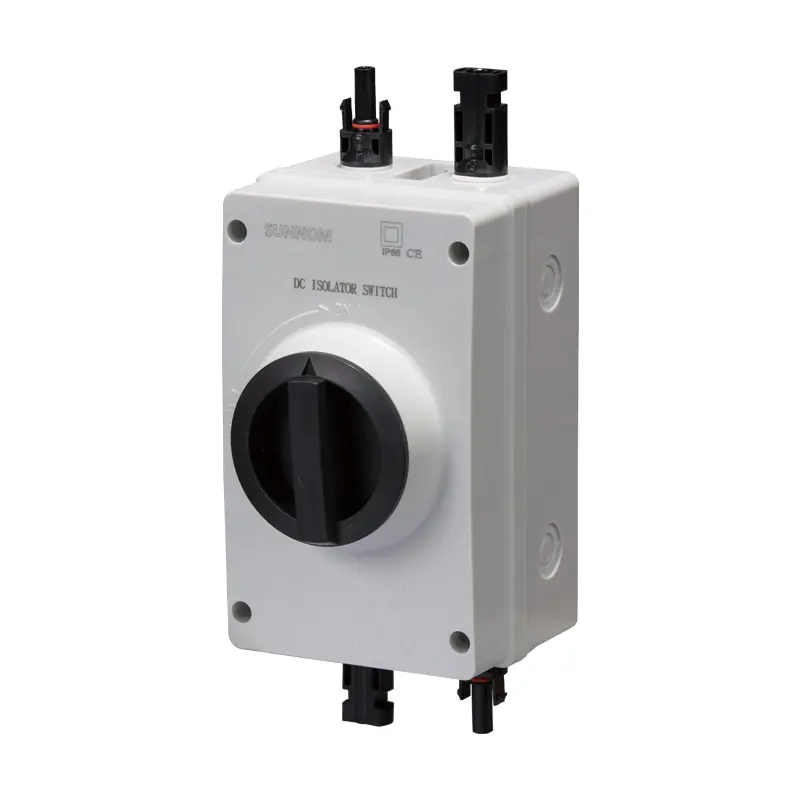
Solar photovoltaic installations demand rigorous safety protocols to protect personnel, equipment, and property from electrical hazards inherent in DC power systems. A quality PV isolator switch serves as a critical protective device that enables safe disconnection of solar arrays during maintenance, emergency response, or system troubleshooting. Understanding which safety standards govern these essential components helps installers, engineers, and facility managers make informed procurement decisions that ensure regulatory compliance and long-term system reliability. The question of what standards a PV isolator switch should meet encompasses international certifications, regional electrical codes, environmental protection requirements, and performance benchmarks that collectively define product quality and operational safety in photovoltaic applications.
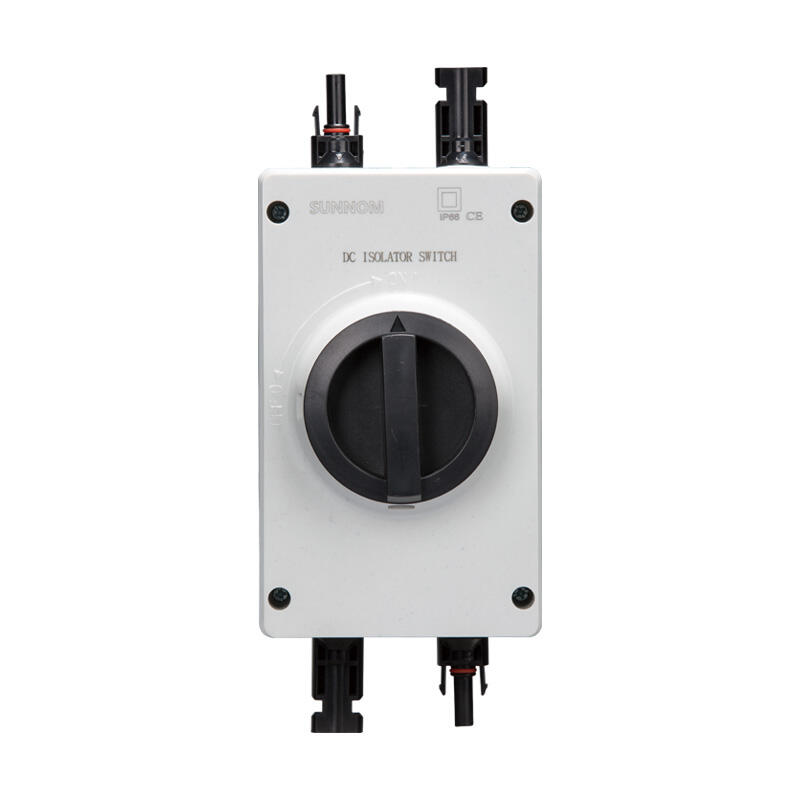
The certification landscape for photovoltaic disconnect devices reflects decades of electrical engineering knowledge translated into measurable safety criteria. Quality manufacturers subject their PV isolator switch products to comprehensive testing protocols that verify performance under extreme temperature variations, voltage stress conditions, fault current scenarios, and prolonged exposure to ultraviolet radiation. These standards address not only the immediate functional requirements of switching operations but also the long-term durability expectations of solar installations that typically operate for twenty-five years or more. Selecting switches that meet appropriate safety standards becomes particularly crucial as system voltages increase with series string configurations and as installation environments range from residential rooftops to utility-scale ground-mount arrays exposed to harsh weather conditions.
International Electrical Safety Certifications
IEC 60947-3 Standard Compliance
The International Electrotechnical Commission standard IEC 60947-3 establishes fundamental requirements for switches, disconnectors, switch-disconnectors, and fuse-combination units specifically designed for industrial applications. This comprehensive standard applies directly to photovoltaic isolator switches used in DC circuits, defining performance criteria that include making and breaking capacity, temperature rise limits, mechanical endurance, and dielectric properties. A quality pv isolator switch complying with IEC 60947-3 demonstrates verified ability to interrupt DC currents safely without generating dangerous arcing that could damage contacts or create fire hazards. The standard specifies rigorous testing protocols that simulate years of operational cycles, ensuring that contact materials maintain low resistance and reliable performance throughout the product lifespan.
Compliance with IEC 60947-3 requires manufacturers to document technical characteristics including rated operational voltage, rated current, utilization category appropriate for photovoltaic applications, and short-circuit making and breaking capacities. The standard distinguishes between different utilization categories, with DC-21B being particularly relevant for photovoltaic systems where switches must handle resistive loads with minimal inductive components. Testing procedures verify that the pv isolator switch can safely interrupt currents at various percentages of rated capacity under both normal and fault conditions. Manufacturers must also demonstrate that their products meet specific temperature rise limits during continuous operation at rated current, preventing overheating that could degrade insulation materials or create fire risks in enclosed junction boxes.
UL 508 and UL 98B Certification Requirements
In North American markets, Underwriters Laboratories standards UL 508 and UL 98B provide essential safety benchmarks for industrial control equipment and enclosed switches respectively. UL 508 covers industrial control equipment including disconnect switches used in photovoltaic systems, establishing requirements for construction, performance, and markings that ensure safe operation within specified electrical parameters. A pv isolator switch certified to UL 508 undergoes extensive evaluation of spacing between live parts, grounding provisions, enclosure integrity, and terminal arrangements that prevent accidental contact with energized components. The standard addresses both normal operating conditions and reasonably foreseeable abnormal scenarios including single-fault conditions that might occur during equipment malfunction or improper installation.
UL 98B specifically addresses enclosed and dead-front switches, which constitute the majority of modern photovoltaic disconnect installations. This standard requires comprehensive testing of mechanical operations, electrical endurance, short-circuit withstand capability, and temperature performance. For a pv isolator switch to achieve UL 98B certification, manufacturers must demonstrate that switch mechanisms operate reliably through thousands of switching cycles without contact welding, excessive wear, or degradation of arc-quenching capabilities. The standard also mandates specific creepage and clearance distances appropriate for DC voltage levels common in photovoltaic arrays, preventing tracking failures that could occur when insulation surfaces become contaminated with moisture, dust, or conductive pollutants accumulated during outdoor service.
TUV and CE Marking for European Markets
European markets require CE marking that demonstrates conformity with applicable EU directives, particularly the Low Voltage Directive and the Electromagnetic Compatibility Directive. TUV certification from accredited testing organizations provides third-party verification that a pv isolator switch meets European safety standards including the harmonized IEC standards adopted as EN standards. TUV Rheinland, TUV SUD, and similar notified bodies conduct thorough evaluations of design documentation, manufacturing processes, and product samples to verify compliance with essential health and safety requirements. This certification process examines not only electrical performance but also mechanical construction quality, material selection, and manufacturing consistency that ensure every unit leaving the factory maintains the same safety characteristics as tested samples.
The CE marking process requires manufacturers to prepare comprehensive technical documentation demonstrating how their pv isolator switch design addresses specific hazards identified in relevant directives. This documentation includes detailed drawings, material specifications, test reports from accredited laboratories, and risk assessments that identify potential failure modes and implemented safeguards. For photovoltaic applications, particular attention focuses on DC arc interruption capability, contact erosion resistance, and long-term insulation performance under thermal cycling and UV exposure. European installers and system integrators increasingly demand TUV certification as evidence of quality beyond simple self-declared CE marking, recognizing that independent testing provides greater assurance of product safety and reliability in critical disconnect applications.
Environmental Protection and Ingress Standards
IP Rating Requirements for Outdoor Installation
The Ingress Protection rating system defined in IEC 60529 specifies the degree of protection provided by enclosures against solid particles and liquids. For photovoltaic installations, the pv isolator switch typically requires a minimum IP65 rating for outdoor mounting applications, indicating complete protection against dust ingress and protection against water jets from any direction. Higher ratings such as IP66 provide enhanced protection against powerful water jets, while IP67 ratings indicate capability to withstand temporary immersion. The first digit of the IP code addresses solid particle protection, with a rating of 6 indicating dust-tight construction that prevents any ingress of fine particles that could accumulate on contact surfaces or insulation barriers.
The second digit addresses liquid ingress protection, which proves critical for photovoltaic isolator switches exposed to rain, snow, ice accumulation, and condensation cycles. A pv isolator switch with inadequate sealing may allow moisture penetration that creates tracking paths across insulation surfaces, corrodes metallic components, or causes contact contamination that increases resistance and generates excessive heat. Quality manufacturers employ multiple sealing strategies including gasket-sealed enclosures, sealed cable entry systems, and conformal coatings on internal components to achieve specified IP ratings. Testing protocols verify that enclosures maintain their protective properties through repeated thermal cycles and mechanical stress, ensuring that seals remain effective throughout the product's operational lifetime despite expansion and contraction of dissimilar materials.
UV Resistance and Material Durability Standards
Photovoltaic systems typically operate in exposed outdoor environments where ultraviolet radiation gradually degrades polymeric materials through photochemical reactions that break molecular bonds and cause embrittlement. A quality pv isolator switch incorporates UV-stabilized plastics in enclosure construction, with material formulations that include UV absorbers and stabilizers that prevent degradation even after decades of sun exposure. Standards such as ASTM G154 and ISO 4892 define accelerated weathering test procedures that simulate years of outdoor exposure through controlled UV radiation and moisture cycling. Manufacturers of quality isolator switches subject enclosure materials to thousands of hours of accelerated weathering followed by mechanical impact testing to verify that aged materials maintain adequate strength and flexibility.
Beyond UV resistance, the pv isolator switch must employ materials with appropriate thermal stability across the temperature range specified for photovoltaic applications, typically from negative forty to positive eighty-five degrees Celsius. Enclosure materials must resist heat distortion at elevated temperatures that occur when switches are mounted in direct sunlight or installed in poorly ventilated enclosures. Internal components including contact materials, springs, and insulating barriers must maintain their mechanical and electrical properties throughout this temperature range without excessive thermal expansion, creep, or embrittlement. Material selection extends to metallic components where corrosion resistance becomes essential, with quality switches incorporating corrosion-resistant alloys, protective platings, or coatings that prevent rust formation and maintain low-resistance electrical connections despite exposure to moisture and atmospheric pollutants.
Salt Spray and Corrosion Resistance Testing
Solar installations in coastal regions or industrial environments face accelerated corrosion from salt-laden air or chemical pollutants. The pv isolator switch intended for such applications should demonstrate compliance with salt spray testing standards such as ASTM B117 or IEC 60068-2-52, which expose products to atomized salt solutions for extended periods to simulate years of coastal service. Quality switches incorporate corrosion-resistant materials including stainless steel hardware, zinc-nickel plated components, or specialized coatings that prevent rust formation on mounting brackets, hinge pins, and fasteners. External terminal connections employ tin-plated copper or other corrosion-resistant conductor materials that maintain low contact resistance despite exposure to corrosive atmospheres.
Salt spray testing reveals weaknesses in protective coatings, galvanic compatibility between dissimilar metals, and the effectiveness of sealing systems that prevent salt intrusion into switch mechanisms. A pv isolator switch that successfully completes salt spray testing demonstrates that its enclosure seals prevent salt-laden moisture from reaching internal components, and that external metallic parts resist visible corrosion even after extended exposure. This testing proves particularly relevant for switches installed on offshore platforms, coastal utility-scale arrays, or rooftop systems in marine environments where salt deposition occurs continuously. Manufacturers typically specify a minimum number of salt spray hours without corrosion failure, providing specifiers with quantitative data for comparing products intended for harsh environmental service.
Electrical Performance and Safety Standards
DC Arc Interruption Capability
Direct current arc interruption presents unique challenges compared to alternating current switching because DC arcs lack the natural current zero crossings that facilitate arc extinction in AC circuits. The pv isolator switch must incorporate arc-quenching mechanisms specifically designed for DC operation, including magnetic blowout coils, arc chutes with deion plates, or sealed contact chambers that rapidly elongate and cool arcs during interruption. Standards such as IEC 60947-3 specify testing procedures that verify a switch can safely interrupt specified DC currents without generating sustained arcs that could weld contacts together or create plasma that breaches enclosure integrity. Quality switches demonstrate reliable DC interruption capability at both rated operational current and higher fault currents that may occur during array short-circuit conditions.
The DC interruption testing process subjects the pv isolator switch to numerous operations at various current levels and power factors, documenting arc energy, interruption time, and contact condition after testing. Switches must interrupt current without excessive contact erosion that would limit operational lifespan, and without generating arc products that deposit conductive residues on insulating surfaces. Modern photovoltaic systems with string voltages reaching 1000V DC or higher place demanding requirements on isolator switch interruption capability, as stored energy in system capacitance can sustain arcs even after source current ceases. Quality manufacturers publish detailed interruption ratings that specify maximum interruptible current as a function of system voltage and available short-circuit current, enabling proper switch selection for specific array configurations.
Short-Circuit Withstand and Overcurrent Protection
While the pv isolator switch primarily serves as a manually operated disconnect device rather than an automatic protective device, it must withstand prospective short-circuit currents that might flow if the switch is accidentally closed onto a faulted circuit or if a downstream fault develops while the switch is closed. Standards define short-circuit withstand current ratings that specify the maximum fault current the switch can endure without catastrophic failure such as contact welding, enclosure rupture, or fire initiation. Testing involves applying specified fault currents for designated durations while monitoring temperature rise, mechanical integrity, and post-fault operational capability. A quality pv isolator switch rated for short-circuit withstand maintains structural integrity and electrical isolation after fault exposure, though it may require contact inspection or replacement following severe fault events.
Coordination between the pv isolator switch and upstream overcurrent protective devices ensures that fault currents remain within the switch's withstand rating. System designers must verify that fuse ratings, circuit breaker trip settings, or inverter current limiting features restrict fault current magnitude and duration to levels the isolator switch can safely endure. Manufacturer documentation specifies whether the switch provides Type 1 coordination (some damage acceptable but safe isolation maintained) or Type 2 coordination (full operational capability maintained after fault clearance) with various overcurrent device types. This coordination analysis proves essential in utility-scale installations where fault currents from multiple parallel strings can exceed the interrupting capability of isolation switches not intended for fault breaking duty.
Insulation Resistance and Dielectric Strength
Electrical insulation within the pv isolator switch must maintain adequate resistance between isolated circuits and between live parts and grounded enclosure components throughout the product's service life. Standards specify minimum insulation resistance values typically measured in megohms that must be maintained under both dry conditions and after conditioning in humid environments. Testing protocols expose switches to elevated humidity and temperature cycles followed by insulation resistance measurement, verifying that moisture absorption does not reduce insulation effectiveness below safe thresholds. Quality switches demonstrate insulation resistance values well above minimum requirements, providing safety margins that account for contamination, aging, and manufacturing variations.
Dielectric strength testing applies high voltage between isolated circuits and between live parts and ground to verify insulation system integrity and identify weak points where breakdown might occur. A pv isolator switch must withstand test voltages significantly higher than rated operational voltage without flashover, surface tracking, or insulation puncture. Testing typically applies twice the rated voltage plus 1000V for one minute duration, monitoring for leakage current that would indicate incipient insulation failure. These tests verify adequate creepage distances across insulating surfaces and clearance distances through air between conductors at different potentials. Quality manufacturers design generous spacing that exceeds minimum standard requirements, accounting for altitude effects on air dielectric strength, contamination that reduces surface insulation, and voltage transients that may exceed nominal system voltage during lightning events or switching operations.
Operational Performance and Reliability Standards
Mechanical Endurance and Switching Cycle Life
The pv isolator switch must demonstrate reliable mechanical operation through thousands of switching cycles representing years of periodic maintenance operations, emergency disconnections, and seasonal system shutdowns. Standards specify mechanical endurance testing that cycles switches through open-close operations at specified rates while monitoring operating force, travel characteristics, and contact condition. Quality switches incorporate robust mechanisms with precision-machined components, hardened bearings, and corrosion-resistant materials that maintain smooth operation throughout rated mechanical life typically specified as 10,000 to 25,000 operations. Testing verifies that mechanism wear does not cause binding, excessive play, or loss of contact pressure that would increase resistance and generate excessive heat during current flow.
Electrical endurance testing subjects the pv isolator switch to repeated switching operations under load conditions that stress contacts with making and breaking arcs. This testing proves more demanding than mechanical endurance because arc energy progressively erodes contact surfaces, creating roughness and oxidation that increase resistance. Quality contact materials such as silver alloys resist arc erosion while maintaining low bulk resistivity that minimizes heating during continuous current flow. The electrical endurance rating typically ranges from several hundred to several thousand loaded operations depending on current magnitude and interrupting duty. Manufacturers specify contact maintenance intervals based on electrical endurance data, guiding users on inspection frequency and contact replacement schedules that maintain safe operation throughout system lifetime.
Temperature Rise and Thermal Management
Current flow through the pv isolator switch generates resistive heating in contacts, terminals, and conductors that must remain within specified temperature limits to prevent insulation degradation, contact oxidation, or thermal damage to adjacent components. Standards define maximum permissible temperature rise above ambient for various parts of the switch assembly, with lower limits for external terminals where field wiring connects and higher limits permissible for internal contacts surrounded by air or insulating materials. Testing involves continuous operation at rated current in still air within an enclosure simulating installed conditions, with thermocouples monitoring temperatures at critical locations. A quality pv isolator switch demonstrates temperature rise well below maximum limits at rated current, providing safety margin for harmonic heating, ambient temperature variation, and manufacturing tolerances that affect resistance.
Thermal management considerations extend beyond steady-state rated current operation to address transient conditions including overload currents, high ambient temperatures, and solar heating of enclosures. The pv isolator switch installed in outdoor junction boxes may experience elevated enclosure temperatures when exposed to direct sunlight, particularly in dark-colored enclosures that absorb solar radiation. Derating curves provided by quality manufacturers specify reduced current capacity at elevated ambient temperatures, ensuring that temperature rise remains within safe limits across the full operating temperature range. Proper terminal design with adequate conductor contact area and appropriate torque specifications minimizes connection resistance that contributes to heating. Some advanced switches incorporate features such as silver-plated terminals or compression terminal designs that maintain low resistance despite thermal cycling and vibration.
Contact Resistance and Power Loss Characteristics
The pv isolator switch introduces series resistance in the circuit path that generates power loss proportional to the square of current flow. This resistance includes contact resistance at moving contact interfaces, bulk resistance of conductor paths through the switch, and terminal connection resistance at field wiring attachment points. Standards specify maximum permissible voltage drop across closed switches at rated current, typically in the millivolt range to minimize power loss in high-current applications. Quality switches employ large contact surfaces with high contact pressure maintained by robust spring mechanisms that ensure low resistance despite contact wear and environmental contamination. Silver and silver alloy contact materials provide excellent conductivity combined with tarnish resistance that maintains stable contact resistance over time.
Measurement of contact resistance and voltage drop provides quality verification during manufacturing and field commissioning. A pv isolator switch with excessive contact resistance generates unnecessary power loss that reduces system efficiency and produces heat that accelerates component aging. In large photovoltaic arrays with multiple isolation switches in series string paths, accumulated voltage drop from poor-quality switches can represent measurable energy loss over system lifetime. Specifiers should review manufacturer data documenting typical voltage drop at rated current, recognizing that values significantly below maximum standard limits indicate superior contact design and materials. Thermographic inspection during operation can identify switches with elevated contact resistance through hotspot formation, enabling preventive maintenance before contact degradation causes failure.
Compliance Documentation and Third-Party Verification
Manufacturer Test Reports and Technical Files
Quality manufacturers maintain comprehensive technical documentation for their pv isolator switch products including detailed test reports from accredited laboratories demonstrating compliance with applicable standards. These technical files include design drawings, material specifications, manufacturing process descriptions, and test data covering electrical performance, mechanical endurance, environmental resistance, and safety characteristics. Third-party test reports from organizations such as TUV, UL, CSA, or IEC-accredited laboratories provide independent verification that products meet standard requirements through witnessed testing of representative samples. Buyers should request access to these documents during product evaluation, verifying that testing covered the specific voltage and current ratings, environmental conditions, and utilization categories appropriate for their photovoltaic application.
The technical file also documents the quality management system under which the pv isolator switch is manufactured, including ISO 9001 certification that demonstrates systematic control of production processes, incoming material inspection, in-process testing, and final product verification. Factory inspection reports from certification bodies verify that manufacturers maintain calibrated test equipment, trained personnel, and documented procedures that ensure production units maintain the same characteristics as laboratory-tested samples. Traceability systems link individual switch serial numbers to production lot records, enabling investigation of field failures and facilitating targeted recalls if quality issues emerge. Sophisticated manufacturers also maintain field performance databases tracking warranty returns and failure modes, using this data to drive continuous improvement in design and manufacturing processes.
Country-Specific Certification Requirements
Beyond international standards such as IEC specifications, the pv isolator switch may require country-specific certifications to satisfy national electrical codes and regulatory requirements. Australian installations require compliance with AS/NZS standards, which generally align with IEC requirements but may specify additional testing or documentation. Japanese markets require PSE certification demonstrating compliance with electrical appliance and material safety law. Chinese markets increasingly require CCC certification, while Indian installations reference BIS standards. Each national certification system involves testing to specific standard versions, factory inspections, and ongoing surveillance to maintain certification validity.
Navigating multiple certification requirements creates challenges for manufacturers seeking global market access and for international project developers sourcing components across regions. Quality manufacturers invest in obtaining multiple certifications for their pv isolator switch products, documenting compliance with regional variations in voltage levels, frequency ratings where applicable, and environmental conditions. The certification marks visible on product nameplates provide quick verification of compliance with local requirements, though purchasers should verify that certifications remain current and cover the specific product configuration being supplied. Some certification schemes require annual factory audits and periodic sample testing to ensure ongoing compliance, providing greater assurance than self-certified or one-time tested products.
Declaration of Conformity and Compliance Statements
European regulations require manufacturers to provide a Declaration of Conformity document stating that their pv isolator switch complies with applicable EU directives and harmonized standards. This declaration identifies the specific standards applied, describes the conformity assessment procedure followed, and provides manufacturer contact information and authorized representative details. The declaration enables enforcement authorities to verify compliance claims and provides installers with documentation needed to satisfy local electrical inspection requirements. Similar declaration requirements exist in other markets, with specific format and content requirements varying by jurisdiction.
Buyers should request complete compliance documentation before specifying or purchasing a pv isolator switch for installation in regulated markets. This documentation package typically includes the Declaration of Conformity, test reports from accredited laboratories, certificates from notified bodies where third-party certification is required, and technical specifications confirming that ratings meet project requirements. Quality manufacturers provide this documentation readily, often making it available through online product portals or technical support channels. Absence of proper compliance documentation should raise concerns about product authenticity and manufacturer commitment to safety and quality standards. Project developers and installers bear responsibility for verifying that installed components meet applicable codes and standards, making thorough documentation review an essential risk management practice.
FAQ
What is the difference between IEC and UL standards for PV isolator switches?
IEC standards represent international consensus developed through the International Electrotechnical Commission and are adopted widely in Europe, Asia, and other global markets, while UL standards are developed by Underwriters Laboratories primarily for North American markets. Though both address similar safety objectives, they differ in specific test procedures, performance criteria, and documentation requirements. A pv isolator switch certified to both standards demonstrates broad compliance suitable for international projects, though specific installations must verify that the applicable standard for their jurisdiction has been met. Some technical requirements differ such as temperature rise limits and short-circuit testing procedures, meaning a switch compliant with one standard may require additional testing or design modifications to meet the other.
How often should PV isolator switches be inspected and tested after installation?
Inspection frequency for installed pv isolator switches depends on environmental conditions, system size, and applicable electrical codes, but annual visual inspection represents a reasonable baseline for most installations. Inspections should examine the switch for signs of overheating such as discoloration or melted plastic, check enclosure integrity including seals and gaskets, verify proper labeling, and test operational smoothness. Electrical testing including insulation resistance measurement and contact resistance testing may be performed less frequently, typically every three to five years or following any electrical fault event. High-current systems or switches installed in harsh environments may warrant more frequent inspection. Manufacturers typically provide recommended maintenance schedules in product documentation that should be incorporated into system maintenance plans.
Can a residential-rated isolator switch be used in commercial PV installations?
While some pv isolator switches carry dual ratings for both residential and commercial applications, using a device rated only for residential service in a commercial installation may violate electrical codes and insurance requirements. Commercial installations often involve higher voltage and current levels, greater fault current availability, and more demanding environmental conditions than residential systems. The switch must be rated for the specific voltage, continuous current, and interrupting duty of the commercial application. Additionally, commercial installations may require specific certifications, ratings, or documentation that residential products lack. Proper selection requires careful review of system requirements and switch ratings, ensuring that all electrical parameters remain within device capabilities with appropriate safety margins.
What IP rating is necessary for a PV isolator switch in rooftop applications?
Rooftop photovoltaic installations typically require a minimum IP65 rating for the pv isolator switch, providing complete dust protection and water jet resistance from any direction. This rating ensures that the switch withstands rain, snow, ice, and periodic washing without moisture ingress that could compromise electrical safety. Installations in particularly harsh environments such as coastal areas with salt spray or industrial settings with airborne contaminants may benefit from higher ratings such as IP66 or IP67. The IP rating applies to the complete installed assembly including cable entries and mounting arrangements, not just the switch enclosure itself. Proper installation practices including downward-facing cable entries, sealed conduit connections, and appropriate mounting orientation help maintain effective protection throughout the system operational life.
Table of Contents
- International Electrical Safety Certifications
- Environmental Protection and Ingress Standards
- Electrical Performance and Safety Standards
- Operational Performance and Reliability Standards
- Compliance Documentation and Third-Party Verification
-
FAQ
- What is the difference between IEC and UL standards for PV isolator switches?
- How often should PV isolator switches be inspected and tested after installation?
- Can a residential-rated isolator switch be used in commercial PV installations?
- What IP rating is necessary for a PV isolator switch in rooftop applications?